Listen to the great reed warbler
Tip: press play to see the sound's live frequency spectrum in blue over the waveform.
About the great reed warbler
The great reed warbler is a bird in the family Acrocephalidae (order Passeriformes). Its conservation status on the IUCN Red List is “least concern”. Adults weigh around 3 g.
What does the great reed warbler sound like?
Most birds have two kinds of vocalisation: songs, which are learned or innate phrases delivered mainly in spring and summer, and calls – brief contact, alarm and begging notes heard all year round. Listening for both helps with identification.
The recordings here are labelled as song. Listen for differences in rhythm, pitch and repetition – the spectrum display makes it easy to see whether a sound is a pure whistle (a thin line), a harsh call (a broad band) or a trill (rapid repeated marks).
From Wikipedia
The great reed warbler (Acrocephalus arundinaceus) is an insectivorous bird in the family Acrocephalidae. It is a medium-sized passerine bird and the largest of the warblers. It breeds throughout mainland Europe and the Western Palearctic and migrates to sub-Saharan Africa in the winter. It favours reed beds during the breeding season, while living in reed beds, bush thickets, rice fields, and forest clearings during the winter. It exhibits relatively low sexual dimorphism, and the sexes are similar in appearance. This species mates both polygynously and monogamously.
Related birds in the genus Acrocephalus

Common reed warbler
Acrocephalus scirpaceus
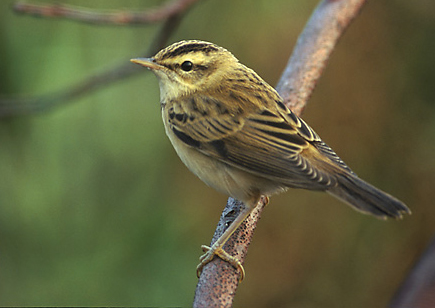
Sedge warbler
Acrocephalus schoenobaenus

Marsh warbler
Acrocephalus palustris

Blyth's reed warbler
Acrocephalus dumetorum

Moustached warbler
Acrocephalus melanopogon

Clamorous reed warbler
Acrocephalus stentoreus

African reed warbler
Acrocephalus baeticatus
More from the family Acrocephalidae


Frequently asked questions
What does a great reed warbler sound like?
You can hear 5 recordings of the great reed warbler on this page, including its song. Most birds have two kinds of vocalisation: songs, which are learned or innate phrases delivered mainly in spring and summer, and calls – brief contact, alarm and begging notes heard all year round.
Is the great reed warbler endangered?
The IUCN Red List classifies the great reed warbler as “least concern”.
What family does the great reed warbler belong to?
The great reed warbler (Acrocephalus arundinaceus) belongs to the family Acrocephalidae in the order Passeriformes.
Sources & credits
- Song · Porvarinlahti, Helsinki, Uusimaa, Finland by Hannu Varkki – CC BY-SA 4.0 · Wikimedia Commons
- Song · Pornaistenniemi, Vanhankaupunginlahti, Helsinki, Uusimaa… by Hannu Varkki – CC BY-SA 4.0 · Wikimedia Commons
- Song · Prague, Hlavní město Praha, Prague, Czech Republic by Jan Cibulka – CC BY-SA 4.0 · Wikimedia Commons
- Song · Park Wschodni, Wrocław, Województwo dolnośląskie, Poland by Phoenicurus ochruros – CC BY-SA 4.0 · Wikimedia Commons
- Reed Warbler (Acrocephalus sp.) - Parc Natural de s'Albufera, Spain 2022-04-21 by Ryan Hodnett – CC BY-SA 4.0 · Wikimedia Commons
- Wikidata Q180835 – CC0
- Wikipedia: Great reed warbler – CC BY-SA 4.0
- Photo by Andreas Trepte – CC BY-SA 2.5