Listen to the great spotted cuckoo
Tip: press play to see the sound's live frequency spectrum in blue over the waveform.
About the great spotted cuckoo
The great spotted cuckoo is a bird in the family Cuculidae (order Cuculiformes). Its conservation status on the IUCN Red List is “least concern”. Adults weigh around 138 g.
What does the great spotted cuckoo sound like?
Most birds have two kinds of vocalisation: songs, which are learned or innate phrases delivered mainly in spring and summer, and calls – brief contact, alarm and begging notes heard all year round. Listening for both helps with identification.
From Wikipedia
The great spotted cuckoo (Clamator glandarius) is a member of the cuckoo order of birds, the Cuculiformes, which also includes the roadrunners, the anis and the coucals.
It is widely spread throughout Africa and the Mediterranean Basin. It is a brood parasite that lays its eggs in the nests of corvids, in particular the Eurasian magpie.
More from the family Cuculidae
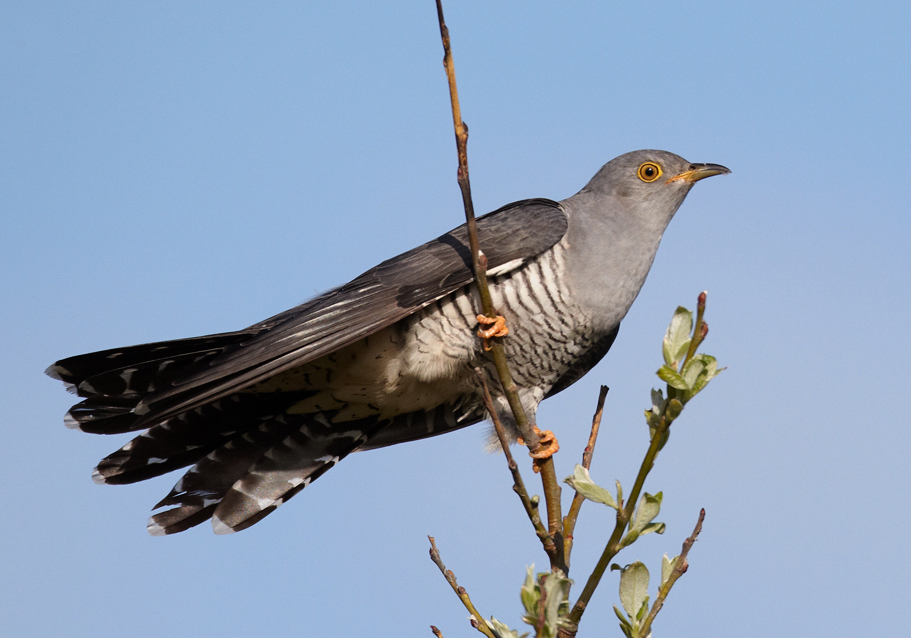
Common cuckoo
Cuculus canorus

Greater coucal
Centropus sinensis

Common hawk-cuckoo
Hierococcyx varius

Yellow-billed cuckoo
Coccyzus americanus

Indian cuckoo
Cuculus micropterus

Lesser coucal
Centropus bengalensis

Guira cuckoo
Guira guira

Sirkeer malkoha
Taccocua leschenaultii

Large hawk-cuckoo
Hierococcyx sparverioides

African cuckoo
Cuculus gularis

Klaas's cuckoo
Chrysococcyx klaas
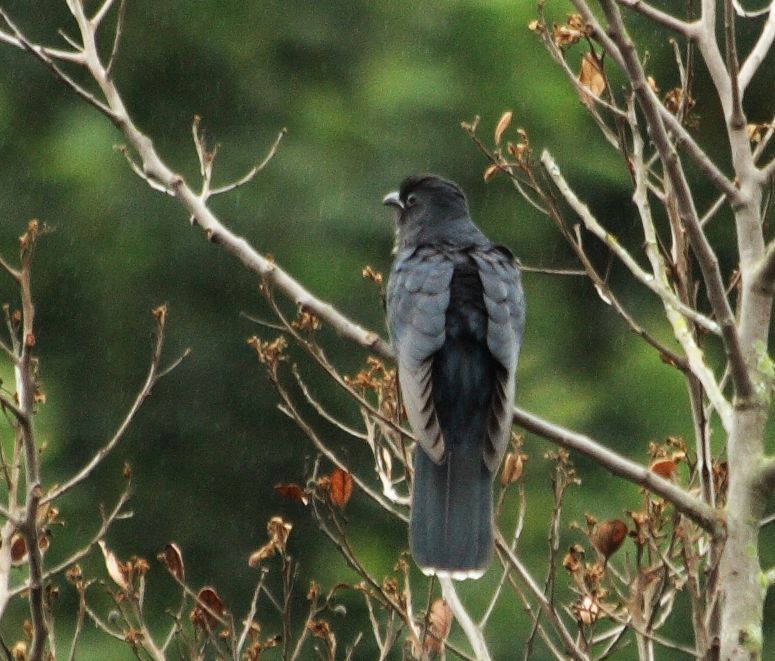
Black cuckoo
Cuculus clamosus
Frequently asked questions
What does a great spotted cuckoo sound like?
You can hear 2 recordings of the great spotted cuckoo on this page. Most birds have two kinds of vocalisation: songs, which are learned or innate phrases delivered mainly in spring and summer, and calls – brief contact, alarm and begging notes heard all year round.
Is the great spotted cuckoo endangered?
The IUCN Red List classifies the great spotted cuckoo as “least concern”.
What family does the great spotted cuckoo belong to?
The great spotted cuckoo (Clamator glandarius) belongs to the family Cuculidae in the order Cuculiformes.
Sources & credits
- Clamator glandarius, bedelroep, Hartbeesfontein, b by JMK – CC BY-SA 4.0 · Wikimedia Commons
- Clamator glandarius, bedelroep, Hartbeesfontein, a by JMK – CC BY-SA 4.0 · Wikimedia Commons
- Wikidata Q665363 – CC0
- Wikipedia: Great spotted cuckoo – CC BY-SA 4.0
- Photo by Yathin S Krishnappa – CC BY-SA 3.0