Listen to the Grey-breasted martin
Tip: press play to see the sound's live frequency spectrum in blue over the waveform.
About the Grey-breasted martin
The Grey-breasted martin is a bird in the family Hirundinidae (order Passeriformes). Its conservation status on the IUCN Red List is “least concern”. Adults weigh around 42 g.
What does the Grey-breasted martin sound like?
Birds produce sound with the syrinx, a vocal organ deep in the chest that can make two independent sounds at once. Songs tend to be long and patterned and are used to hold territory and attract a mate; calls are short signals for contact, alarm and flight.
The recordings here are labelled as calls. Listen for differences in rhythm, pitch and repetition – the spectrum display makes it easy to see whether a sound is a pure whistle (a thin line), a harsh call (a broad band) or a trill (rapid repeated marks).
From Wikipedia
The grey-breasted martin (Progne chalybea) is a large swallow from Central and South America.
Related birds in the genus Progne
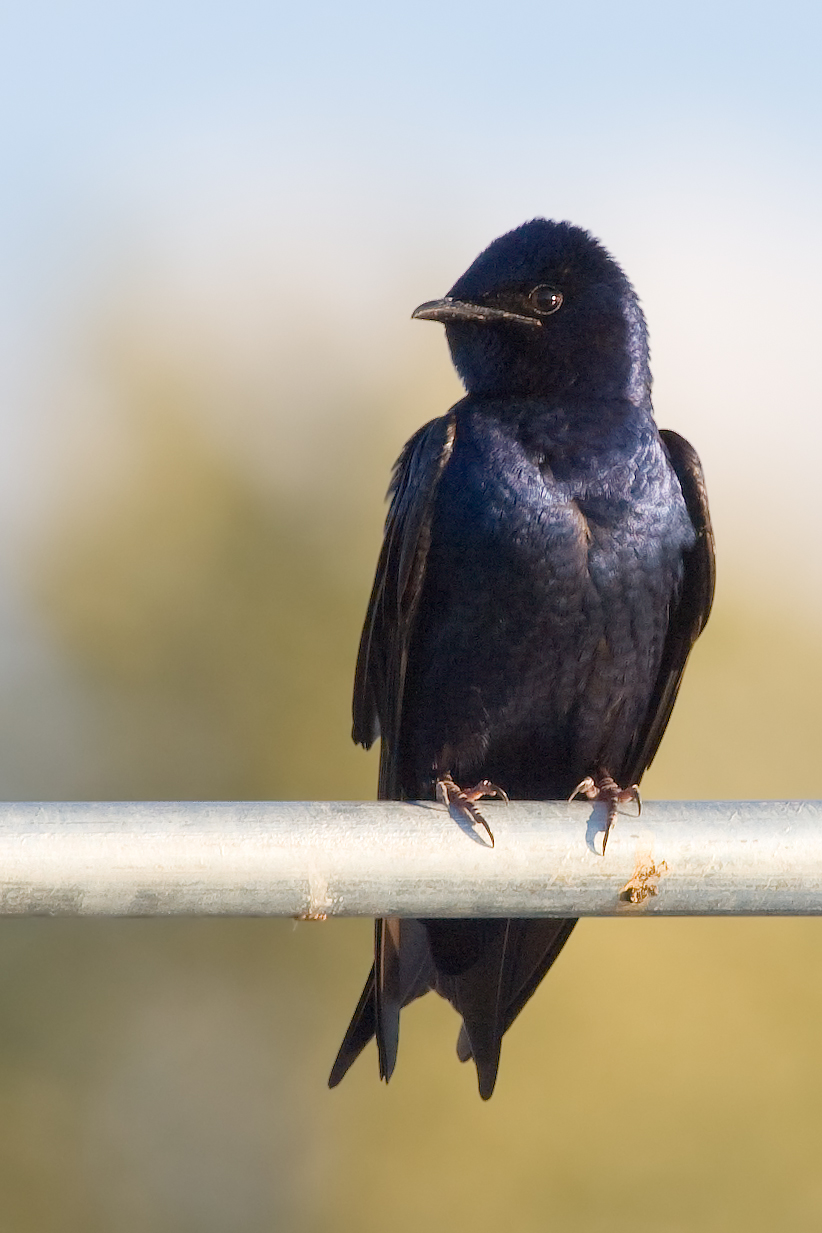
More from the family Hirundinidae

Barn swallow
Hirundo rustica

Sand martin
Riparia riparia

Western house martin
Delichon urbicum

Eurasian crag martin
Ptyonoprogne rupestris

Eastern red-rumped swallow
Cecropis daurica

Wire-tailed swallow
Hirundo smithii

Tree swallow
Tachycineta bicolor

Cliff swallow
Petrochelidon pyrrhonota

Lesser striped swallow
Cecropis abyssinica

Blue-and-white swallow
Pygochelidon cyanoleuca

Violet-green swallow
Tachycineta thalassina
Frequently asked questions
What does a Grey-breasted martin sound like?
You can hear 1 recording of the Grey-breasted martin on this page, including its calls. Birds produce sound with the syrinx, a vocal organ deep in the chest that can make two independent sounds at once.
Is the Grey-breasted martin endangered?
The IUCN Red List classifies the Grey-breasted martin as “least concern”.
What family does the Grey-breasted martin belong to?
The Grey-breasted martin (Progne chalybea) belongs to the family Hirundinidae in the order Passeriformes.
Sources & credits
- Calls · Guayas: Pacoa Beach, Ecuador by Niels Krabbe – CC BY-SA 4.0 · Wikimedia Commons
- Wikidata Q3136297 – CC0
- Wikipedia: Grey-breasted martin – CC BY-SA 4.0
- Photo by Cláudio Dias Timm from Rio Grande do Sul – CC BY-SA 2.0