Listen to the New Zealand falcon
Tip: press play to see the sound's live frequency spectrum in blue over the waveform.
About the New Zealand falcon
The New Zealand falcon is a bird in the family Falconidae (order Falconiformes). Its conservation status on the IUCN Red List is “least concern”. Adults have a wingspan of about 80 cm and weigh around 330 g.
What does the New Zealand falcon sound like?
Birds produce sound with the syrinx, a vocal organ deep in the chest that can make two independent sounds at once. Songs tend to be long and patterned and are used to hold territory and attract a mate; calls are short signals for contact, alarm and flight.
From Wikipedia
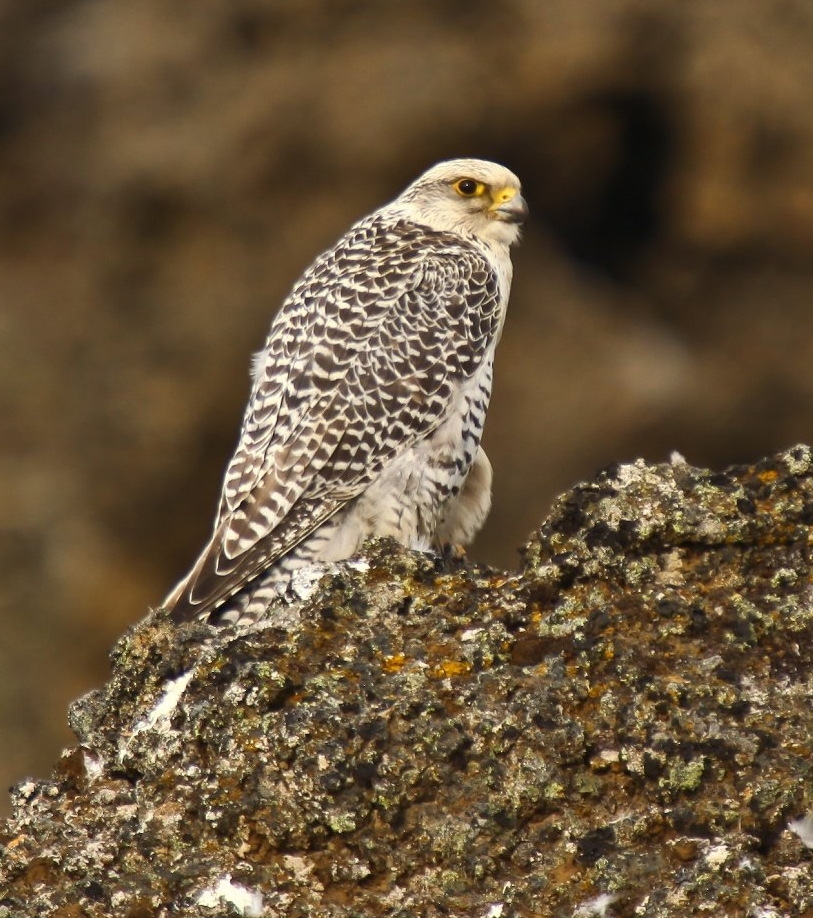
The New Zealand falcon (Māori: kārearea, kārewarewa, or kāiaia; Falco novaeseelandiae) is New Zealand's only falcon, and one of only four living native and two endemic birds of prey. It is frequently mistaken for the larger and more common swamp harrier. It is the country's most threatened bird of prey, with only around 5000–15000 individuals remaining. Under the New Zealand Threat Classification System the falcon is stable at Threatened, with conservation research needed. The kārearea was voted Bird of the Year winner in the annual Forest & Bird competition in 2012 and again in 2025.
Related birds in the genus Falco




More from the family Falconidae


Frequently asked questions
What does a New Zealand falcon sound like?
You can hear 1 recording of the New Zealand falcon on this page. Birds produce sound with the syrinx, a vocal organ deep in the chest that can make two independent sounds at once.
Is the New Zealand falcon endangered?
The IUCN Red List classifies the New Zealand falcon as “least concern”.
What family does the New Zealand falcon belong to?
The New Zealand falcon (Falco novaeseelandiae) belongs to the family Falconidae in the order Falconiformes.
Sources & credits
- New Zealand falcon song-10 by Department of Conservation – CC BY 4.0 · Wikimedia Commons
- Wikidata Q756643 – CC0
- Wikipedia: New Zealand falcon – CC BY-SA 4.0
- Photo by Tony Wills – CC BY-SA 3.0