Listen to the Rufous hornero
Tip: press play to see the sound's live frequency spectrum in blue over the waveform.
About the Rufous hornero
The Rufous hornero is a bird in the family Furnariidae (order Passeriformes). Its conservation status on the IUCN Red List is “least concern”. Adults weigh around 53 g.
What does the Rufous hornero sound like?
Most birds have two kinds of vocalisation: songs, which are learned or innate phrases delivered mainly in spring and summer, and calls – brief contact, alarm and begging notes heard all year round. Listening for both helps with identification.
The recordings here are labelled as alarm call. Listen for differences in rhythm, pitch and repetition – the spectrum display makes it easy to see whether a sound is a pure whistle (a thin line), a harsh call (a broad band) or a trill (rapid repeated marks).
From Wikipedia
The rufous hornero (Furnarius rufus) is a medium-sized ovenbird in the family Furnariidae. It occurs in eastern South America and is the national bird of Argentina. Also known as the red ovenbird, it is common in savannas, second-growth scrub, pastures, and agricultural land and is synanthropic. Its range includes midwestern, southeastern, and southern Brazil, Bolivia, Paraguay, Uruguay, and northern and central Argentina, extending as far south as northern Patagonia. The species is most closely related to the crested hornero of Paraguay and Argentina. There are four accepted subspecies.
Related birds in the genus Furnarius


More from the family Furnariidae

Red-billed scythebill
Campylorhamphus trochilirostris

Chestnut-winged hookbill
Ancistrops strigilatus

Brown-capped tit-spinetail
Leptasthenura fuliginiceps

Sharp-tailed streamcreeper
Lochmias nematura

Elegant woodcreeper
Xiphorhynchus elegans
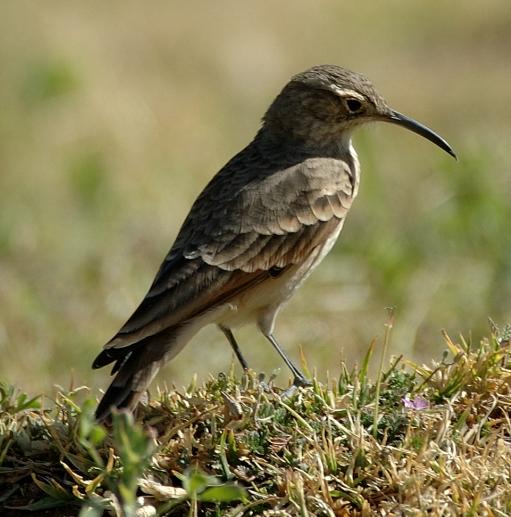
Slender-billed miner
Geositta tenuirostris

Ruddy foliage-gleaner
Clibanornis rubiginosus

Rufous-rumped foliage-gleaner
Philydor erythrocercum

Orange-fronted plushcrown
Metopothrix aurantiaca

Scaly-throated foliage-gleaner
Anabacerthia variegaticeps
Frequently asked questions
What does a Rufous hornero sound like?
You can hear 1 recording of the Rufous hornero on this page, including its alarm call. Most birds have two kinds of vocalisation: songs, which are learned or innate phrases delivered mainly in spring and summer, and calls – brief contact, alarm and begging notes heard all year round.
Is the Rufous hornero endangered?
The IUCN Red List classifies the Rufous hornero as “least concern”.
What family does the Rufous hornero belong to?
The Rufous hornero (Furnarius rufus) belongs to the family Furnariidae in the order Passeriformes.
Sources & credits
- Alarm call · Ezeiza, Ezeiza Partido, Buenos Aires Province, Argentina by Gabriele Magurno – CC BY-SA 4.0 · Wikimedia Commons
- Wikidata Q852731 – CC0
- Wikipedia: Rufous hornero – CC BY-SA 4.0
- Photo by Dario Sanches from São Paulo, Brasil – CC BY-SA 2.0