Listen to the tawny-bellied babbler
Tip: press play to see the sound's live frequency spectrum in blue over the waveform.
About the tawny-bellied babbler
The tawny-bellied babbler is a bird in the family Timaliidae (order Passeriformes). Its conservation status on the IUCN Red List is “least concern”. Adults weigh around 13 g.
What does the tawny-bellied babbler sound like?
Birds produce sound with the syrinx, a vocal organ deep in the chest that can make two independent sounds at once. Songs tend to be long and patterned and are used to hold territory and attract a mate; calls are short signals for contact, alarm and flight.
From Wikipedia
The tawny-bellied babbler (Dumetia hyperythra) also known in older Indian works as the rufous-bellied babbler is a small babbler that forages in small groups in low scrub forests. Like other members of the large Old World babbler family they are passerine birds characterised by soft fluffy plumage. There are three subspecies within the Indian subcontinent. The nominate hyperythra found in northern and eastern India is uniformly brown underneath while albogularis of the western Indian peninsula is white throated. The population in Sri Lanka, phillipsi, is also white throated but is paler underneath and has a larger bill.
Related birds in the genus Dumetia
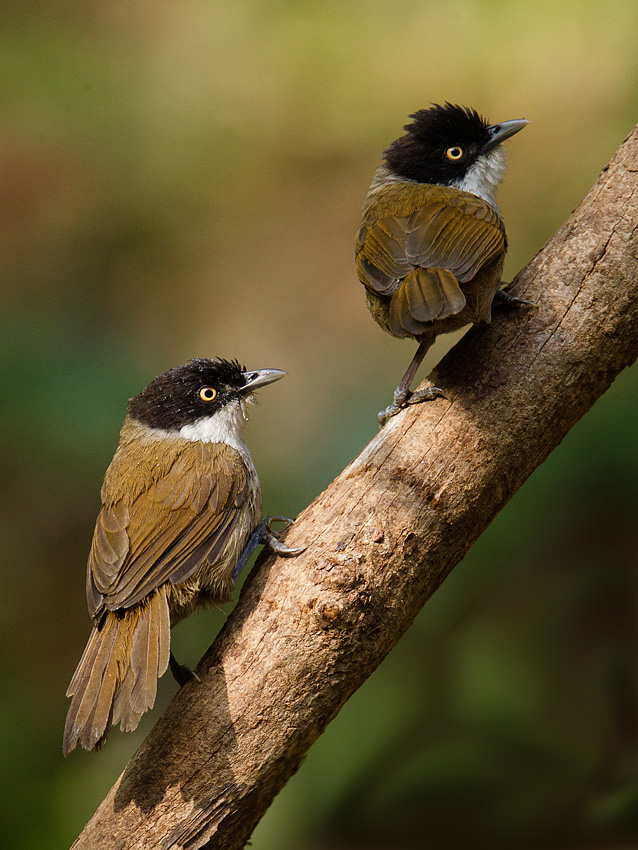
More from the family Timaliidae

Frequently asked questions
What does a tawny-bellied babbler sound like?
You can hear 1 recording of the tawny-bellied babbler on this page. Birds produce sound with the syrinx, a vocal organ deep in the chest that can make two independent sounds at once.
Is the tawny-bellied babbler endangered?
The IUCN Red List classifies the tawny-bellied babbler as “least concern”.
What family does the tawny-bellied babbler belong to?
The tawny-bellied babbler (Dumetia hyperythra) belongs to the family Timaliidae in the order Passeriformes.
Sources & credits
- TRSR Tawnybellied Babbler by T. R. Shankar Raman – CC BY-SA 4.0 · Wikimedia Commons
- Wikidata Q1305417 – CC0
- Wikipedia: Tawny-bellied babbler – CC BY-SA 4.0
- Photo by Davidvraju – CC BY-SA 4.0