About Gnawa music
Gnawa music is a music genre that emerged in Morocco. It is usually classed as a form of music of North Africa and African folk music.
From Wikipedia
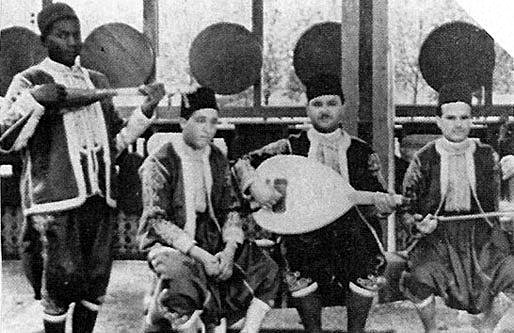
Gnawa music (Ar. ڭْناوة or كْناوة) is a body of Moroccan religious songs and rhythms. Emerging in the 16th and 17th centuries, Gnawa music developed through the cultural fusion of West Africans brought to Morocco, notably the Hausa, Fulani, and Bambara peoples, whose presence and heritage are reflected in the songs and rituals. Its well-preserved heritage combines ritual poetry with traditional music and dancing. The music is performed at lila, communal nights of celebration dedicated to prayer and healing guided by the Gnawa maalem, or master musician, and their group of musicians and dancers. Though many of the influences that formed this music can be traced to West African kingdoms, its traditional practice is concentrated in Morocco. Gnawa music has spread to many other countries in Africa and Europe, such as France.
The origins of Gnawa music are intricately associated with that of the famed royal "Black Guard" of Morocco.
Genre family tree
Parent genres (↑) and subgenres (↓) of Gnawa music.
- ↑ music of North Africa
- ↑ African folk music
Related genres

Arabic music
music of the Arab world
Byzantine music
music in the tradition of the Byzantine Empire

Music of Egypt
musical culture of Egypt
Music of the Middle East
music of the Middle Eastern region
Andalusi classical music
10th century · Emirate of Córdoba

Music of Morocco
musical culture of Morocco
Malhun
1300s · Maghreb
Coptic music
music genre
Frequently asked questions
What is Gnawa music?
Gnawa music is a music genre that emerged in Morocco. It is usually classed as a form of music of North Africa and African folk music.
Where and when did Gnawa music originate?
Gnawa music originated in Morocco.