About Son mexicano
Son mexicano is a music genre. It is usually classed as a form of regional Mexican, Mexican folk music and son.
Son mexicano has given rise to 3 subgenres on this site, such as Son jarocho, Son huasteco and Son jaliscience.
From Wikipedia
Son mexicano is a style of Mexican folk music and dance that encompasses various regional genres, all of which are called son. The term son mexicano literally translates to “the Mexican sound” in English. Mexican sones are often rooted in a mix of Spanish, African, and Indigenous musical elements.
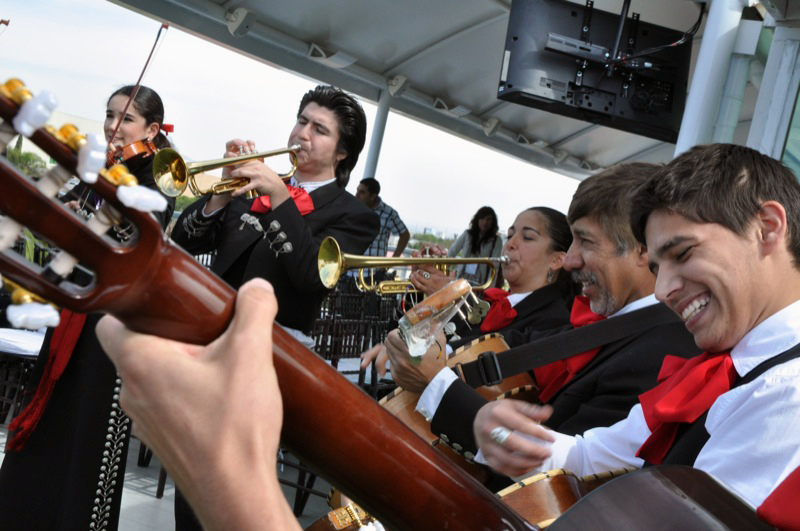
Major son traditions are located in the La Huasteca region, the Gulf coast, the Pacific coast of Guerrero and Oaxaca, Michoacán and Jalisco (where it later developed into mariachi). The music is historically played on string instruments such as guitars and violins, with elements which have not changed since the Spanish baroque music that was introduced into Mexico during the colonial period. The dance associated with this music is social and often includes a stomping rhythm on a raised platform to provide percussion.
Genre family tree
Parent genres (↑) and subgenres (↓) of Son mexicano.
- ↑ regional Mexican
- ↑ Mexican folk music
- ↑ son
- ↓ Son jarocho
- ↓ Son huasteco
- ↓ Son jaliscience
Related genres

Frequently asked questions
What is Son mexicano?
Son mexicano is a music genre. It is usually classed as a form of regional Mexican, Mexican folk music and son.