Listen: Bolero (Spanish dance) examples
Tip: press play to see the sound's live frequency spectrum in blue over the waveform.
About Bolero (Spanish dance)
Bolero (Spanish dance) is a music genre. It is usually classed as a form of music of Spain and Spanish dance.
Artists closely associated with the genre include José Feliciano and Omara Portuondo.
From Wikipedia
Bolero is a Spanish dance in 3/4 time popular in the late 18th and early 19th centuries. It originated from the seguidilla sometime between 1750 and 1772, and it became very popular in Madrid, La Mancha, Andalusia and Murcia in the 1780s. Bolero was performed as a solo or partner dance with a moderately slow tempo, accompanied by guitar and castanets, and with lyrics in the form of the seguidilla.
Genre family tree
Parent genres (↑) and subgenres (↓) of Bolero (Spanish dance).
- ↑ music of Spain
- ↑ Spanish dance
Key artists
- José Feliciano
- Omara Portuondo
Related genres
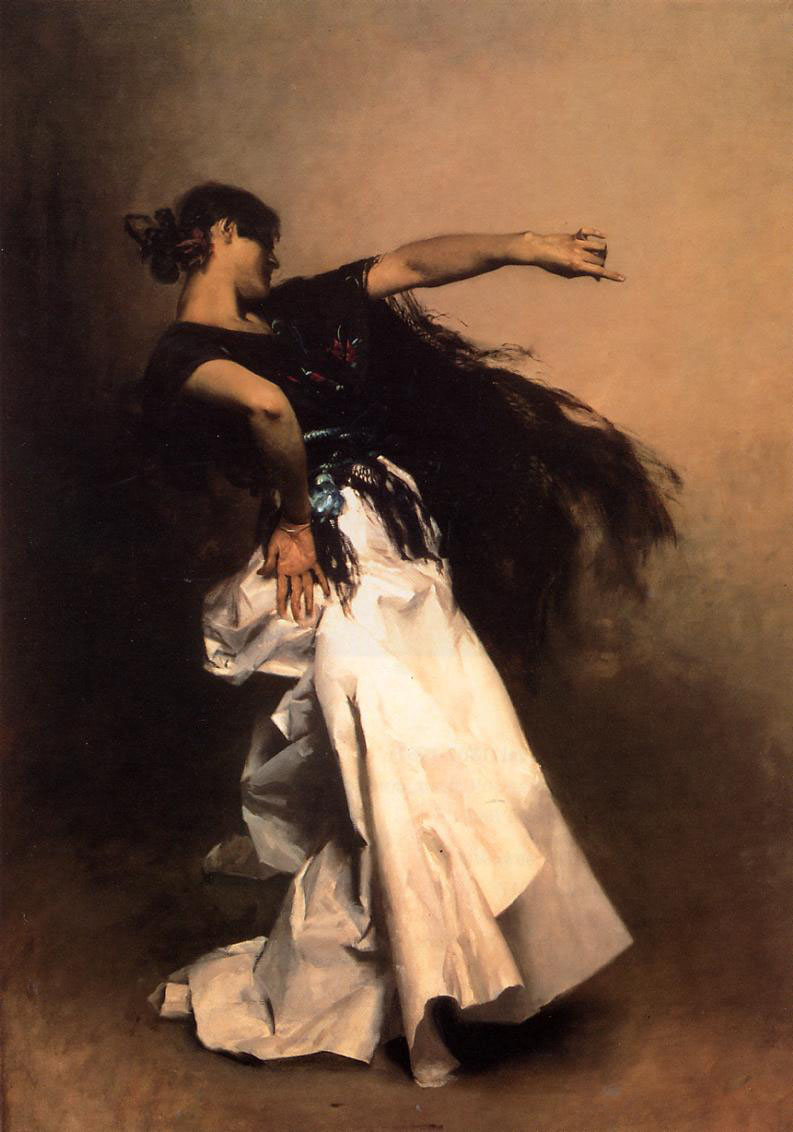
Flamenco
1770s · Spain
Cuplé
Spain
Spanish jazz
Spain
Music of Andalusia
musical styles in Andalusia
Basque music
music of the Basque region and people
Punk rock in Spain
Spain
Music of Aragon
music of a geographical region
Music of the Canary Islands
overview of music and musical traditions in region
Frequently asked questions
What is Bolero (Spanish dance)?
Bolero (Spanish dance) is a music genre. It is usually classed as a form of music of Spain and Spanish dance.
Who are famous Bolero (Spanish dance) artists?
José Feliciano and Omara Portuondo.
Sources & credits
- Wikidata Q489913 – CC0
- Wikipedia: Bolero (Spanish dance) – CC BY-SA 4.0
- MusicBrainz genre – CC0
- Bolero "Torear por lo fino" - restaurado by Cruz – CC BY-SA 4.0
- Boléro de Ravel, Orchestre de l'Association des Concerts Lamoureux, 1939, 3 by Maurice Ravel – Public domain
- Boléro de Ravel, Orchestre de l'Association des Concerts Lamoureux, 1935, 1 by Maurice Ravel – Public domain