About Electric blues
Electric blues is a music genre in the 1940s. It is usually classed as a form of blues.
Artists closely associated with the genre include Jimi Hendrix, Chris Rea, John Mayall, Billy Gibbons, Dusty Hill and Otis Rush.
Electric blues has given rise to 3 subgenres on this site, such as Chicago blues, British blues and Swamp blues.
From Wikipedia
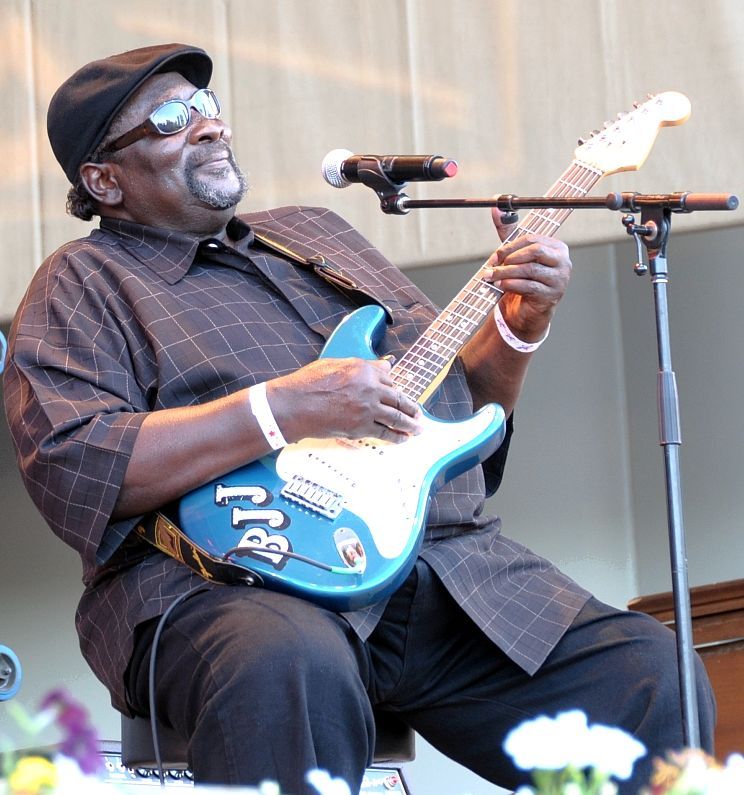
Electric blues is blues music distinguished by the use of electric amplification for musical instruments. The guitar was the first instrument to be popularly amplified and used by early pioneers T-Bone Walker in the late 1930s and John Lee Hooker and Muddy Waters in the 1940s. Their styles developed into West Coast blues, Detroit blues, and post-World War II Chicago blues, which differed from earlier, predominantly acoustic-style blues. By the early 1950s, Little Walter was a featured soloist on blues harmonica using a small hand-held microphone fed into a guitar amplifier. Although it took a little longer, the electric bass guitar gradually replaced the upright bass by the early 1960s. Keyboards, especially electric organs and electric pianos, later became widely used in electric blues.
Genre family tree
Parent genres (↑) and subgenres (↓) of Electric blues.
Key artists
- Jimi Hendrix
- Chris Rea
- John Mayall
- Billy Gibbons
- Dusty Hill
- Otis Rush
- Lightnin' Hopkins
Related genres



Frequently asked questions
What is Electric blues?
Electric blues is a music genre in the 1940s. It is usually classed as a form of blues.
Where and when did Electric blues originate?
Electric blues originated in the 1940s.
Who are famous Electric blues artists?
Jimi Hendrix, Chris Rea, John Mayall, Billy Gibbons, Dusty Hill and Otis Rush.