How the alphorn makes its sound
In the Hornbostel–Sachs system, which classifies instruments by how they produce sound, the alphorn belongs to the brass (lip-vibrated aerophones): the player's buzzing lips set the air column vibrating – trumpets, horns, trombones, tubas and the didgeridoo.
More broadly it is one of the aerophones (wind instruments), where sound comes from vibrating air.
Players shape its sound through technique and materials; the resonating body filters the raw vibration, boosting some harmonics and damping others.
From Wikipedia
The alphorn (German: Alphorn, Alpenhorn; French: cor des Alpes; Italian: corno alpino) is a traditional lip-reed wind instrument. It consists of a long straight wooden natural horn, with a length of 3 to 4 metres (9.8 to 13 feet), a conical bore and a wooden cup-shaped mouthpiece. The alphorn was traditionally made in one piece from the trunk of a pine. Modern alphorns are usually made in three detachable sections for easier transport and handling, carved from blocks of spruce. The alphorn is used by rural communities in the Alps. Similar wooden horns were used for communication in most mountainous regions of Europe, from the Alps to the Carpathians.
Other brass

Trumpet
Brass (lip-vibrated aerophones)

Trombone
Brass (lip-vibrated aerophones)

Tuba
Brass (lip-vibrated aerophones)

French horn
Brass (lip-vibrated aerophones)

Brass instrument
Brass (lip-vibrated aerophones)

Vuvuzela
Brass (lip-vibrated aerophones)
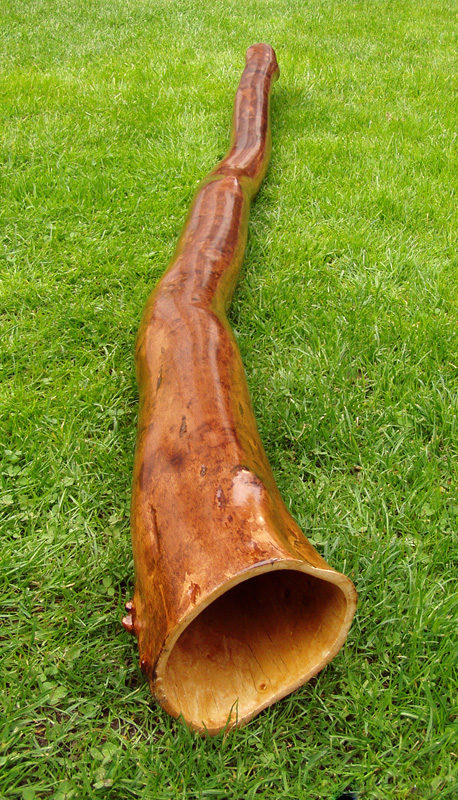
Didgeridoo
Brass (lip-vibrated aerophones)

Cornet
Brass (lip-vibrated aerophones)
Frequently asked questions
What does an alphorn sound like?
As one of the brass, its sound comes from the way the player's buzzing lips set the air column vibrating.
What type of instrument is the alphorn?
It is classified as brass (lip-vibrated aerophones) (Hornbostel–Sachs 423.121.22).
Sources & credits
- Wikidata Q685206 – CC0
- Wikipedia: Alphorn – CC BY-SA 4.0
- Image by Hans Hillewaert – CC BY-SA 3.0