How the baritone horn makes its sound
In the Hornbostel–Sachs system, which classifies instruments by how they produce sound, the baritone horn belongs to the brass (lip-vibrated aerophones): the player's buzzing lips set the air column vibrating – trumpets, horns, trombones, tubas and the didgeridoo.
More broadly it is one of the aerophones (wind instruments), where sound comes from vibrating air.
Its timbre – the colour that lets you tell it apart from other instruments playing the same note – comes from the mix of overtones its body and resonator emphasise.
From Wikipedia
The baritone horn, or often simply the baritone, is a valved brass instrument pitched in B♭ in the saxhorn family, employed chiefly in brass, military and concert bands. In North America, for most of the 20th century, the term baritone also referred to similar instruments with a wider bore closer to the euphonium. The baritone has three or sometimes four piston valves, although rotary valves are common in Eastern and Central Europe, where it is called the Tenorhorn. The bore is moderately conical, like the E♭ tenor horn and cornet, although narrower than the euphonium and other valved bugles, like the flugelhorn and tuba. It uses a wide-rimmed cup mouthpiece of similar dimensions to trombone and euphonium mouthpieces. Like the trombone and the euphonium, the baritone can be considered either a transposing instrument reading B♭ treble clef or a non-transposing instrument in bass clef.
Other brass

Trumpet
Brass (lip-vibrated aerophones)

Trombone
Brass (lip-vibrated aerophones)

Tuba
Brass (lip-vibrated aerophones)

French horn
Brass (lip-vibrated aerophones)

Brass instrument
Brass (lip-vibrated aerophones)

Vuvuzela
Brass (lip-vibrated aerophones)
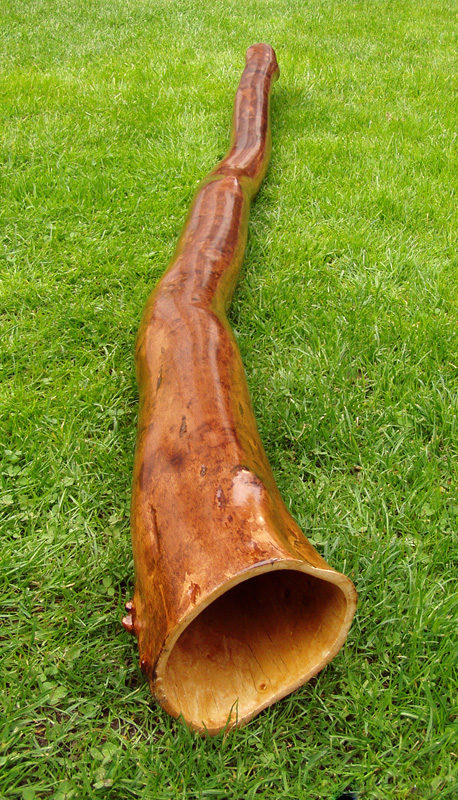
Didgeridoo
Brass (lip-vibrated aerophones)

Cornet
Brass (lip-vibrated aerophones)
Frequently asked questions
What does a baritone horn sound like?
As one of the brass, its sound comes from the way the player's buzzing lips set the air column vibrating.
What type of instrument is the baritone horn?
It is classified as brass (lip-vibrated aerophones) (Hornbostel–Sachs 423.232).
Sources & credits
- Wikidata Q790468 – CC0
- Wikipedia: Baritone horn – CC BY-SA 4.0
- Image by Foehammer – CC BY-SA 4.0