How the cimbasso makes its sound
In the Hornbostel–Sachs system, which classifies instruments by how they produce sound, the cimbasso belongs to the brass (lip-vibrated aerophones): the player's buzzing lips set the air column vibrating – trumpets, horns, trombones, tubas and the didgeridoo.
More broadly it is one of the aerophones (wind instruments), where sound comes from vibrating air.
Players shape its sound through technique and materials; the resonating body filters the raw vibration, boosting some harmonics and damping others.
From Wikipedia
The cimbasso is a low brass instrument that covers the same range as a tuba or contrabass trombone. First appearing in Italy in the early 19th century as an upright serpent, the term cimbasso came to denote several instruments that could play the lowest brass part in 19th century Italian opera orchestras. The modern cimbasso design, first appearing as the trombone basso Verdi in the 1880s, has four to six rotary valves (or occasionally piston valves), a forward-facing bell, and a predominantly cylindrical bore. These features lend its sound to the bass of the trombone family rather than the tuba, and its valves allow for more agility than a contrabass trombone. Like the modern contrabass trombone, it is most often pitched in F, although models are occasionally made in E♭ and low C or B♭.
Other brass

Trumpet
Brass (lip-vibrated aerophones)

Trombone
Brass (lip-vibrated aerophones)

Tuba
Brass (lip-vibrated aerophones)

French horn
Brass (lip-vibrated aerophones)

Brass instrument
Brass (lip-vibrated aerophones)

Vuvuzela
Brass (lip-vibrated aerophones)
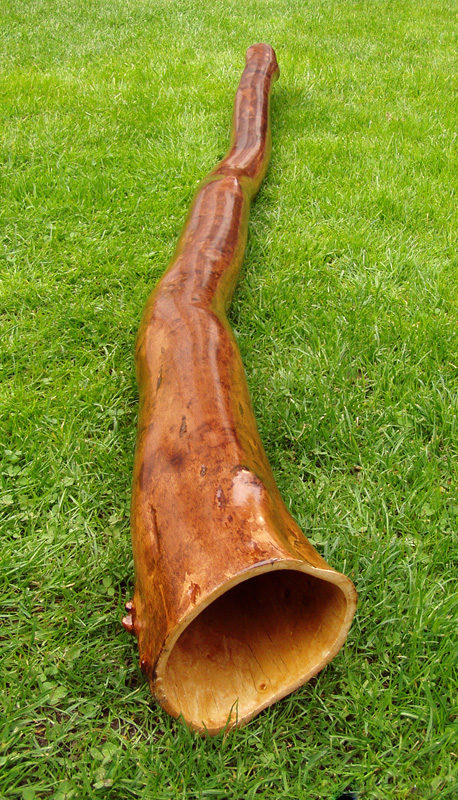
Didgeridoo
Brass (lip-vibrated aerophones)

Cornet
Brass (lip-vibrated aerophones)
Frequently asked questions
What does a cimbasso sound like?
As one of the brass, its sound comes from the way the player's buzzing lips set the air column vibrating.
What type of instrument is the cimbasso?
It is classified as brass (lip-vibrated aerophones) (Hornbostel–Sachs 423.233.2).
Sources & credits
- Wikidata Q749247 – CC0
- Wikipedia: Cimbasso – CC BY-SA 4.0
- Image by Jonathanischoice – CC BY 4.0