How the cornett makes its sound
In the Hornbostel–Sachs system, which classifies instruments by how they produce sound, the cornett belongs to the brass (lip-vibrated aerophones): the player's buzzing lips set the air column vibrating – trumpets, horns, trombones, tubas and the didgeridoo.
More broadly it is one of the aerophones (wind instruments), where sound comes from vibrating air.
Players shape its sound through technique and materials; the resonating body filters the raw vibration, boosting some harmonics and damping others.
From Wikipedia
The cornett (Italian: cornetto, German: Zink) is a lip-reed wind instrument that dates from the Medieval, Renaissance and Baroque periods, popular from 1500 to 1650. Although smaller and larger sizes were made in both straight and curved forms, surviving cornetts are mostly curved, built in the treble size from 51 to 63 cm (20 to 25 in) in length, usually described as in G. The note sounded with all finger-holes covered is A3, which can be lowered a further whole tone to G by slackening the embouchure. The name cornett comes from the Italian cornetto, meaning "small horn".
Other brass

Trumpet
Brass (lip-vibrated aerophones)

Trombone
Brass (lip-vibrated aerophones)

Tuba
Brass (lip-vibrated aerophones)

French horn
Brass (lip-vibrated aerophones)

Brass instrument
Brass (lip-vibrated aerophones)

Vuvuzela
Brass (lip-vibrated aerophones)
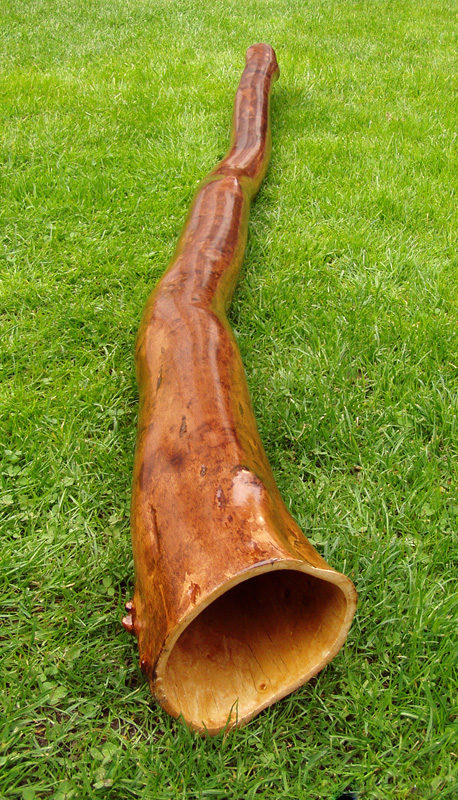
Didgeridoo
Brass (lip-vibrated aerophones)

Cornet
Brass (lip-vibrated aerophones)
Frequently asked questions
What does a cornett sound like?
As one of the brass, its sound comes from the way the player's buzzing lips set the air column vibrating.
What type of instrument is the cornett?
It is classified as brass (lip-vibrated aerophones) (Hornbostel–Sachs 423.21).
Sources & credits
- Wikidata Q204638 – CC0
- Wikipedia: Cornett – CC BY-SA 4.0
- Image by Multimann – CC BY-SA 3.0