How the double bell euphonium makes its sound
In the Hornbostel–Sachs system, which classifies instruments by how they produce sound, the double bell euphonium belongs to the brass (lip-vibrated aerophones): the player's buzzing lips set the air column vibrating – trumpets, horns, trombones, tubas and the didgeridoo.
More broadly it is one of the aerophones (wind instruments), where sound comes from vibrating air.
Press play above and watch the spectrum: the evenly spaced peaks are harmonics, and their relative strength is what gives the instrument its character.
From Wikipedia
The double bell euphonium is a duplex instrument based on the euphonium. The larger bell produces the mellow tone of a standard euphonium; the second smaller bell has a brighter tone, similar to a baritone horn or valve trombone. The instrument is sometimes dismissed as a novelty, but has had some enthusiastic adherents, including a few professional musicians using it as their sole or primary instrument. The smaller bell can give more appropriate tone in the higher range of the instrument. The two bells can also be used for special effects, such as echoes, and using the distinctly different tone of the two bells for a single musician to give the effect of call and response.
Other brass

Trumpet
Brass (lip-vibrated aerophones)

Trombone
Brass (lip-vibrated aerophones)

Tuba
Brass (lip-vibrated aerophones)

French horn
Brass (lip-vibrated aerophones)

Brass instrument
Brass (lip-vibrated aerophones)

Vuvuzela
Brass (lip-vibrated aerophones)
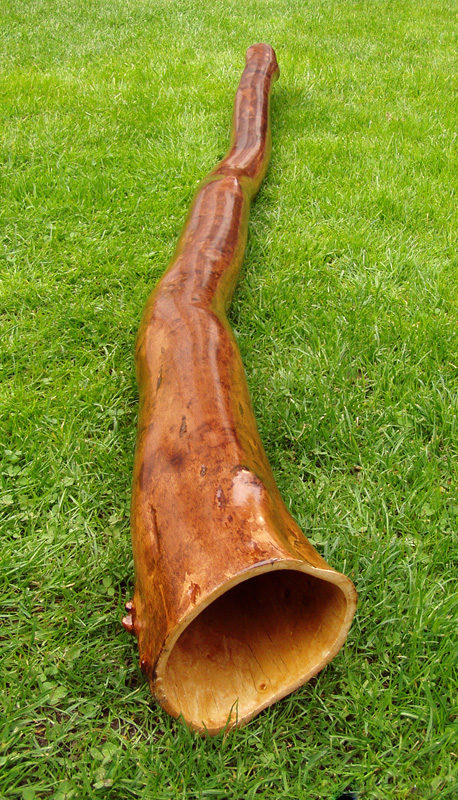
Didgeridoo
Brass (lip-vibrated aerophones)

Cornet
Brass (lip-vibrated aerophones)
Frequently asked questions
What does a double bell euphonium sound like?
As one of the brass, its sound comes from the way the player's buzzing lips set the air column vibrating.
What type of instrument is the double bell euphonium?
It is classified as brass (lip-vibrated aerophones) (Hornbostel–Sachs 423.232).
Sources & credits
- Wikidata Q5299971 – CC0
- Wikipedia: Double bell euphonium – CC BY-SA 4.0
- Image by University of Edinburgh – CC BY 3.0