Listen to the flugelhorn
Tip: press play to see the sound's live frequency spectrum in blue over the waveform.
How the flugelhorn makes its sound
In the Hornbostel–Sachs system, which classifies instruments by how they produce sound, the flugelhorn belongs to the brass (lip-vibrated aerophones): the player's buzzing lips set the air column vibrating – trumpets, horns, trombones, tubas and the didgeridoo.
More broadly it is one of the aerophones (wind instruments), where sound comes from vibrating air.
Its timbre – the colour that lets you tell it apart from other instruments playing the same note – comes from the mix of overtones its body and resonator emphasise.
From Wikipedia
The flugelhorn (, also fluegelhorn, flugel horn; from German, Flügelhorn) is a high brass instrument similar to the trumpet and cornet, but with the wider conical bore of a bugle, producing a darker, mellower sound or timbre. Like trumpets and cornets, most flugelhorns are built in B♭, though some are in C. Developed in Germany in the late 18th century from earlier traditional signal instruments, bugles were fitted with tone holes to produce keyed bugles around 1800. The keyed bugle was soon replaced by valved bugles after the invention of valves in the 1820s. Modern flugelhorns usually have piston valves, though flugelhorns with rotary valves are common in central and eastern Europe. Initially adopted by military and brass bands in Europe, the flugelhorn began to be used as a solo jazz instrument in the mid 20th century by musicians including Miles Davis, Shorty Rogers, Clark Terry, and Chuck Mangione. It has established a place in band, jazz, and popular music, and is commonly played by trumpet players as a doubling instrument.
Other brass

Trumpet
Brass (lip-vibrated aerophones)

Trombone
Brass (lip-vibrated aerophones)

Tuba
Brass (lip-vibrated aerophones)

French horn
Brass (lip-vibrated aerophones)

Brass instrument
Brass (lip-vibrated aerophones)

Vuvuzela
Brass (lip-vibrated aerophones)
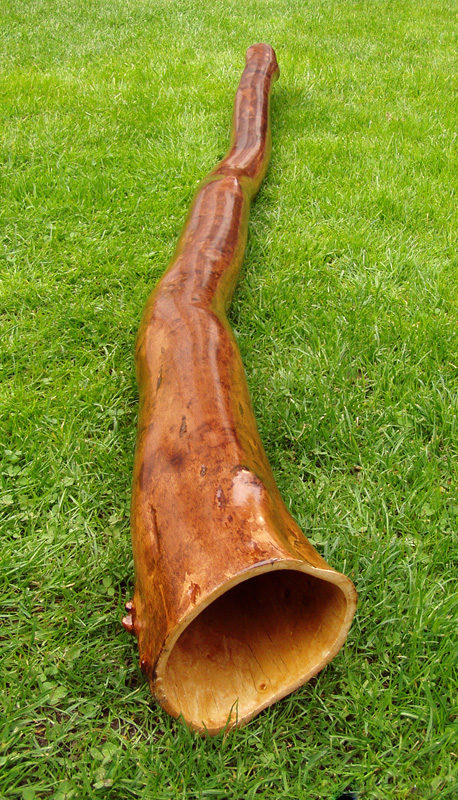
Didgeridoo
Brass (lip-vibrated aerophones)

Cornet
Brass (lip-vibrated aerophones)
Questions people ask
Real questions from the Stack Exchange community – follow a link to read the discussion.
Frequently asked questions
What does a flugelhorn sound like?
Listen to 1 recording on this page. As one of the brass, its sound comes from the way the player's buzzing lips set the air column vibrating.
What type of instrument is the flugelhorn?
It is classified as brass (lip-vibrated aerophones) (Hornbostel–Sachs 423.232).
Sources & credits
- Kumasi Groove (plus flugelhorn) (ISRC USUAN1100184) by Kumasi Groove (plus flugelhorn) Kevin MacLeod – CC BY 3.0 · Wikimedia Commons
- Wikidata Q382616 – CC0
- Wikipedia: Flugelhorn – CC BY-SA 4.0
- Image by Jessealderliesten at Dutch Wikipedia – CC BY-SA 3.0