How the Hunting-horn makes its sound
In the Hornbostel–Sachs system, which classifies instruments by how they produce sound, the Hunting-horn belongs to the brass (lip-vibrated aerophones): the player's buzzing lips set the air column vibrating – trumpets, horns, trombones, tubas and the didgeridoo.
More broadly it is one of the aerophones (wind instruments), where sound comes from vibrating air.
Its timbre – the colour that lets you tell it apart from other instruments playing the same note – comes from the mix of overtones its body and resonator emphasise.
From Wikipedia
A horn is any of a family of musical instruments made of a tube, usually made of metal and often curved in various ways, with one narrow end into which the musician blows, and a wide end from which sound emerges. In horns, unlike some other brass instruments such as the trumpet, the bore gradually increases in width through most of its length—that is to say, it is conical rather than cylindrical. In jazz and popular-music contexts, the word may be used loosely to refer to any wind instrument, and a section of brass or woodwind instruments, or a mixture of the two, is called a horn section in these contexts.
Other brass

Trumpet
Brass (lip-vibrated aerophones)

Trombone
Brass (lip-vibrated aerophones)

Tuba
Brass (lip-vibrated aerophones)

French horn
Brass (lip-vibrated aerophones)

Brass instrument
Brass (lip-vibrated aerophones)

Vuvuzela
Brass (lip-vibrated aerophones)
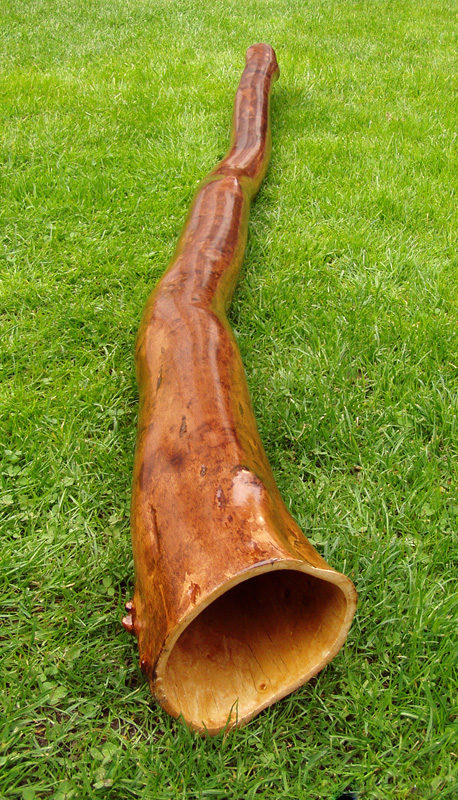
Didgeridoo
Brass (lip-vibrated aerophones)

Cornet
Brass (lip-vibrated aerophones)
Frequently asked questions
What does the Hunting-horn sound like?
As one of the brass, its sound comes from the way the player's buzzing lips set the air column vibrating.
What type of instrument is the Hunting-horn?
It is classified as brass (lip-vibrated aerophones) (Hornbostel–Sachs 423.121).
Sources & credits
- Wikidata Q1678302 – CC0
- Wikipedia: Horn (instrument) – CC BY-SA 4.0
- Image by Ejdzej – Public domain