How the Irish flute makes its sound
In the Hornbostel–Sachs system, which classifies instruments by how they produce sound, the Irish flute belongs to the flutes (edge-blown): an air jet is split on a sharp edge, setting the air column vibrating – flutes, recorders, whistles and panpipes.
More broadly it is one of the aerophones (wind instruments), where sound comes from vibrating air.
Its timbre – the colour that lets you tell it apart from other instruments playing the same note – comes from the mix of overtones its body and resonator emphasise.
From Wikipedia
The Irish flute is a conical-bore, simple-system, wooden flute of the type favoured by classical flautists of the early 19th century, or to a flute of modern manufacture derived from this design (often with modifications to optimize its use in Irish Traditional Music, Scottish Traditional Music or Music of Brittany and other Celtic nations). The majority of traditional Irish flute players use a wooden, simple-system flute.
Although it is played in every county in Ireland, the flute has a strong heartland in the mid-western counties of Roscommon, Leitrim, Sligo, south Fermanagh, east Galway, Clare and west Limerick.
Other flutes


More instruments from Ireland
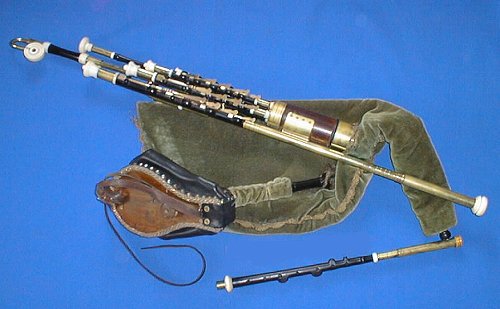

Frequently asked questions
What does the Irish flute sound like?
As one of the flutes, its sound comes from the way an air jet is split on a sharp edge, setting the air column vibrating.
What type of instrument is the Irish flute?
It is classified as flutes (edge-blown) (Hornbostel–Sachs 421.121.12).
Where does the Irish flute come from?
The Irish flute originates from Ireland.
Sources & credits
- Wikidata Q1672931 – CC0
- Wikipedia: Irish flute – CC BY-SA 4.0
- Image by T. Bart fl.1800s – Public domain