How the keyed trumpet makes its sound
In the Hornbostel–Sachs system, which classifies instruments by how they produce sound, the keyed trumpet belongs to the brass (lip-vibrated aerophones): the player's buzzing lips set the air column vibrating – trumpets, horns, trombones, tubas and the didgeridoo.
More broadly it is one of the aerophones (wind instruments), where sound comes from vibrating air.
Players shape its sound through technique and materials; the resonating body filters the raw vibration, boosting some harmonics and damping others.
From Wikipedia
The keyed trumpet is a cylindrical-bore brass instrument in the trumpet family, developed from the natural trumpet in the late 18th century. It makes use of tone holes, operated by keys, to alter pitch and provide a full chromatic scale, rather than extending the length of tubing with a slide or valves. It reached its high-point in popularity c. 1800 when two important trumpet concertos were written for it by Austrian composers Joseph Haydn and Johann Nepomuk Hummel. The conical bore of its more successful sibling, the keyed bugle, was more accommodating of the acoustic compromises caused by tone holes, and the keyed trumpet was quickly supplanted by instruments that were developed after the invention of valves in the 1820s, such as the cornet à pistons and eventually the modern valved trumpet. It is rarely seen in modern performances.
Other brass

Trumpet
Brass (lip-vibrated aerophones)

Trombone
Brass (lip-vibrated aerophones)

Tuba
Brass (lip-vibrated aerophones)

French horn
Brass (lip-vibrated aerophones)

Brass instrument
Brass (lip-vibrated aerophones)

Vuvuzela
Brass (lip-vibrated aerophones)
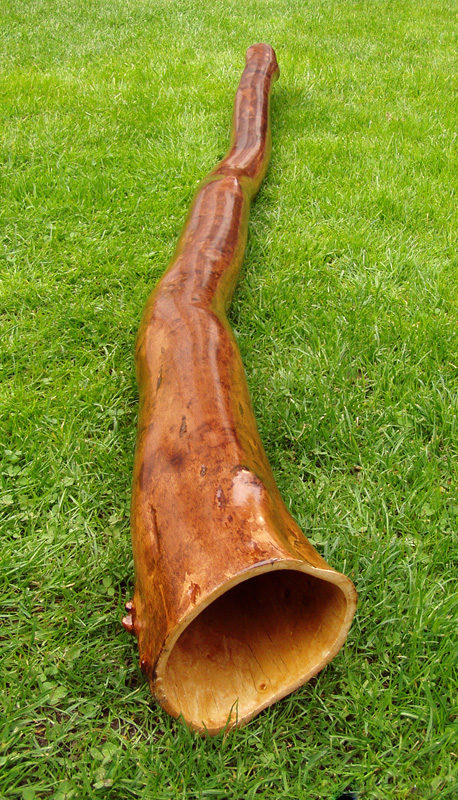
Didgeridoo
Brass (lip-vibrated aerophones)

Cornet
Brass (lip-vibrated aerophones)
Frequently asked questions
What does a keyed trumpet sound like?
As one of the brass, its sound comes from the way the player's buzzing lips set the air column vibrating.
What type of instrument is the keyed trumpet?
It is classified as brass (lip-vibrated aerophones) (Hornbostel–Sachs 423.211).
Sources & credits
- Wikidata Q1435054 – CC0
- Wikipedia: Keyed trumpet – CC BY-SA 4.0
- Image by St Cecilia's Hall Concert Room & Music Museum, Musical Instruments Museums Edinburgh; photographed by Dominic… – CC BY 3.0