How the natural horn makes its sound
In the Hornbostel–Sachs system, which classifies instruments by how they produce sound, the natural horn belongs to the brass (lip-vibrated aerophones): the player's buzzing lips set the air column vibrating – trumpets, horns, trombones, tubas and the didgeridoo.
More broadly it is one of the aerophones (wind instruments), where sound comes from vibrating air.
Players shape its sound through technique and materials; the resonating body filters the raw vibration, boosting some harmonics and damping others.
From Wikipedia
The natural horn is a musical instrument descending from the hunting horn, and is the predecessor to the modern-day French horn. Differentiated by its lack of valves, natural horn relies on a variety of crooks and hand stopping techniques to play the instrument's full range. Throughout the seventeenth and eighteenth centuries, the natural horn evolved separate from the trumpet by widening of the bell and lengthening of the tubes. Natural horn consists of a mouthpiece, a pitched crook, foundational tubing, and flared bell. This instrument was used extensively until the emergence of the valved horn in the early 19th century.
Other brass

Trumpet
Brass (lip-vibrated aerophones)

Trombone
Brass (lip-vibrated aerophones)

Tuba
Brass (lip-vibrated aerophones)

French horn
Brass (lip-vibrated aerophones)

Brass instrument
Brass (lip-vibrated aerophones)

Vuvuzela
Brass (lip-vibrated aerophones)
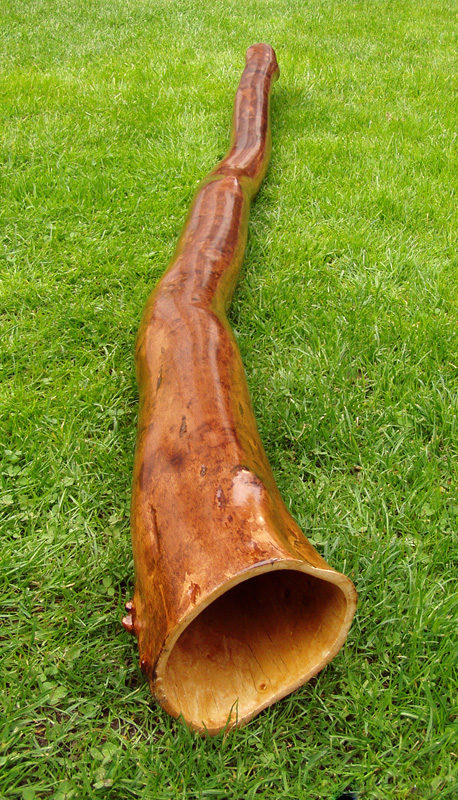
Didgeridoo
Brass (lip-vibrated aerophones)

Cornet
Brass (lip-vibrated aerophones)
Frequently asked questions
What does a natural horn sound like?
As one of the brass, its sound comes from the way the player's buzzing lips set the air column vibrating.
What type of instrument is the natural horn?
It is classified as brass (lip-vibrated aerophones) (Hornbostel–Sachs 423.121.2).
Sources & credits
- Wikidata Q1757829 – CC0
- Wikipedia: Natural horn – CC BY-SA 4.0
- Image by No machine-readable author provided. Gaius Cornelius assumed (based on copyright claims). – Public domain