How the piccolo trumpet makes its sound
In the Hornbostel–Sachs system, which classifies instruments by how they produce sound, the piccolo trumpet belongs to the brass (lip-vibrated aerophones): the player's buzzing lips set the air column vibrating – trumpets, horns, trombones, tubas and the didgeridoo.
More broadly it is one of the aerophones (wind instruments), where sound comes from vibrating air.
Press play above and watch the spectrum: the evenly spaced peaks are harmonics, and their relative strength is what gives the instrument its character.
From Wikipedia
The piccolo trumpet is the smallest member of the trumpet family, pitched one octave higher than the standard B♭ trumpet. Most piccolo trumpets are built to play in either B♭ or A, using a separate leadpipe for each key. The tubing in the B♭ piccolo trumpet is one-half the length of that in a standard B♭ trumpet. Piccolo trumpets in G, F, and even high C are also manufactured, but are rarer.
The piccolo trumpet should not be confused with the pocket trumpet, which plays in the same pitch as the regular B♭ trumpet.
Other brass

Trumpet
Brass (lip-vibrated aerophones)

Trombone
Brass (lip-vibrated aerophones)

Tuba
Brass (lip-vibrated aerophones)

French horn
Brass (lip-vibrated aerophones)

Brass instrument
Brass (lip-vibrated aerophones)

Vuvuzela
Brass (lip-vibrated aerophones)
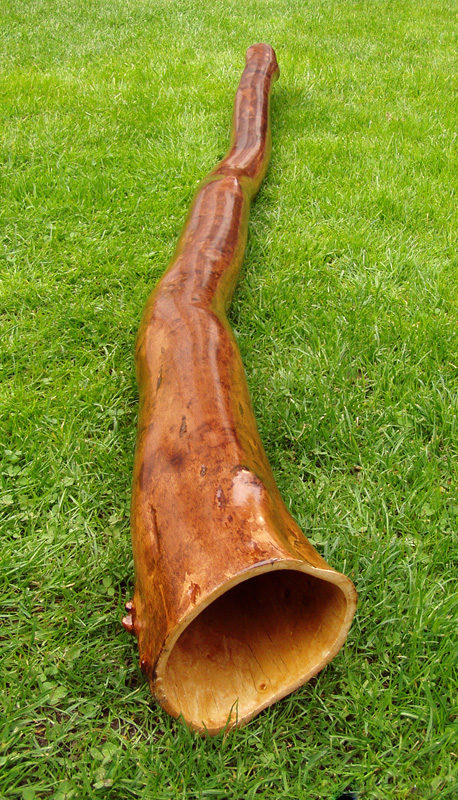
Didgeridoo
Brass (lip-vibrated aerophones)

Cornet
Brass (lip-vibrated aerophones)
Frequently asked questions
What does a piccolo trumpet sound like?
As one of the brass, its sound comes from the way the player's buzzing lips set the air column vibrating.
What type of instrument is the piccolo trumpet?
It is classified as brass (lip-vibrated aerophones) (Hornbostel–Sachs 423.233).
Sources & credits
- Wikidata Q1569742 – CC0
- Wikipedia: Piccolo trumpet – CC BY-SA 4.0
- Image by Christopher Roberts – CC0 1.0