How the serpent makes its sound
In the Hornbostel–Sachs system, which classifies instruments by how they produce sound, the serpent belongs to the brass (lip-vibrated aerophones): the player's buzzing lips set the air column vibrating – trumpets, horns, trombones, tubas and the didgeridoo.
More broadly it is one of the aerophones (wind instruments), where sound comes from vibrating air.
Its timbre – the colour that lets you tell it apart from other instruments playing the same note – comes from the mix of overtones its body and resonator emphasise.
From Wikipedia
The serpent is a low-pitched early wind instrument in the lip-reed family, developed in the Renaissance era. It has a trombone-like mouthpiece, with six tone holes arranged in two groups of three fingered by each hand. It is named for its long, conical bore bent into a snakelike shape, and unlike most brass instruments is made from wood with an outer covering of leather or parchment. A distant ancestor of the tuba, the serpent is related to the cornett and was used for bass parts from the 17th to the early 19th centuries.
Other brass

Trumpet
Brass (lip-vibrated aerophones)

Trombone
Brass (lip-vibrated aerophones)

Tuba
Brass (lip-vibrated aerophones)

French horn
Brass (lip-vibrated aerophones)

Brass instrument
Brass (lip-vibrated aerophones)

Vuvuzela
Brass (lip-vibrated aerophones)
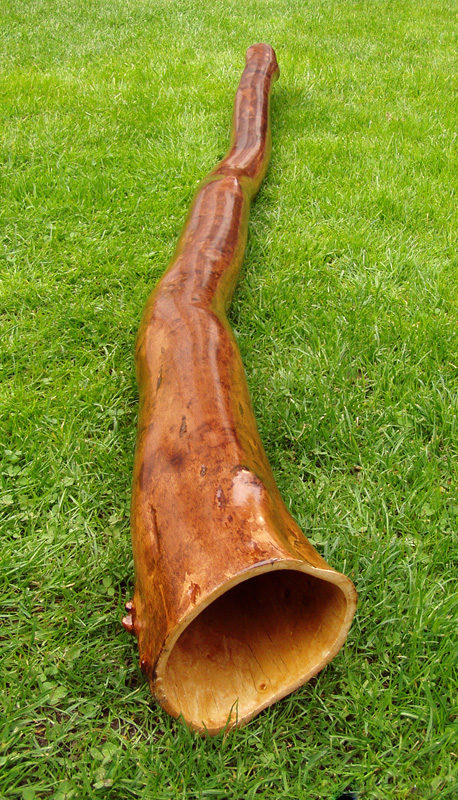
Didgeridoo
Brass (lip-vibrated aerophones)

Cornet
Brass (lip-vibrated aerophones)
Frequently asked questions
What does a serpent sound like?
As one of the brass, its sound comes from the way the player's buzzing lips set the air column vibrating.
What type of instrument is the serpent?
It is classified as brass (lip-vibrated aerophones) (Hornbostel–Sachs 423.213).
Sources & credits
- Wikidata Q742168 – CC0
- Wikipedia: Serpent (instrument) – CC BY-SA 4.0
- Image by Paolo Terzi – CC BY-SA 3.0