How the slide trumpet makes its sound
In the Hornbostel–Sachs system, which classifies instruments by how they produce sound, the slide trumpet belongs to the brass (lip-vibrated aerophones): the player's buzzing lips set the air column vibrating – trumpets, horns, trombones, tubas and the didgeridoo.
More broadly it is one of the aerophones (wind instruments), where sound comes from vibrating air.
Press play above and watch the spectrum: the evenly spaced peaks are harmonics, and their relative strength is what gives the instrument its character.
From Wikipedia
The slide trumpet is an early type of trumpet fitted with a movable section of telescopic tubing, similar to the slide of a trombone. Eventually, the slide trumpet evolved into the sackbut, which evolved into the modern-day trombone. The key difference between these two instruments is that the slide trumpet possesses only a single slide joint, rather than the two joints in the U-shaped slide of the sackbut or trombone. There are several types of slide trumpet of different places and eras.
Other brass

Trumpet
Brass (lip-vibrated aerophones)

Trombone
Brass (lip-vibrated aerophones)

Tuba
Brass (lip-vibrated aerophones)

French horn
Brass (lip-vibrated aerophones)

Brass instrument
Brass (lip-vibrated aerophones)

Vuvuzela
Brass (lip-vibrated aerophones)
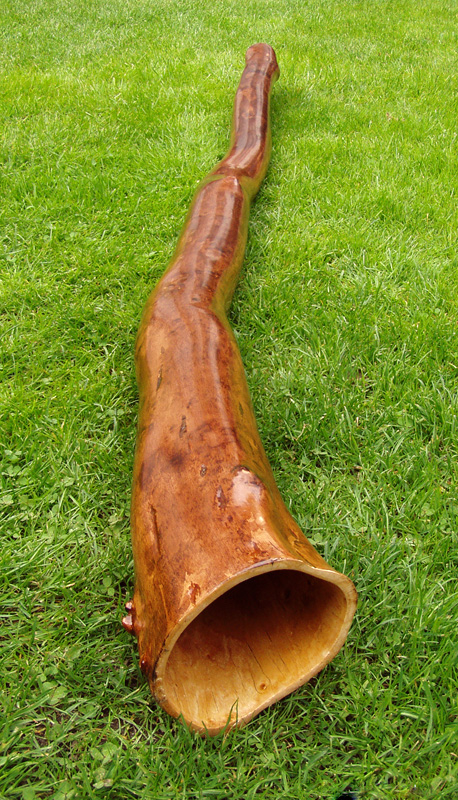
Didgeridoo
Brass (lip-vibrated aerophones)

Cornet
Brass (lip-vibrated aerophones)
Questions people ask
Real questions from the Stack Exchange community – follow a link to read the discussion.
Frequently asked questions
What does a slide trumpet sound like?
As one of the brass, its sound comes from the way the player's buzzing lips set the air column vibrating.
What type of instrument is the slide trumpet?
It is classified as brass (lip-vibrated aerophones) (Hornbostel–Sachs 423.22).
Sources & credits
- Wikidata Q228529 – CC0
- Wikipedia: Slide trumpet – CC BY-SA 4.0
- Image by Guido Magnano – Public domain