How the sudrophone makes its sound
In the Hornbostel–Sachs system, which classifies instruments by how they produce sound, the sudrophone belongs to the brass (lip-vibrated aerophones): the player's buzzing lips set the air column vibrating – trumpets, horns, trombones, tubas and the didgeridoo.
More broadly it is one of the aerophones (wind instruments), where sound comes from vibrating air.
Players shape its sound through technique and materials; the resonating body filters the raw vibration, boosting some harmonics and damping others.
From Wikipedia
The sudrophone is a brass instrument invented by the French instrument maker François Sudre (1844–1912). Its shape resembles that of an ophicleide. It was patented in 1892.
A sudrophone has a conical bore and three or four Perinet valves. Its length is 86 centimetres (34 in) and the bell diameter is 17 centimetres (6.7 in). The "valve" nearest the mouthpiece on the bell throat controls a silk membrane to create a nasal effect, which Sudre designed to make a sound like a cello or a bassoon. The instrument is very similar to the baritone horn and helicon. Acoustically these resembled the saxhorns, but the shape was different as the main tube was doubled back on itself, giving a vertical appearance reminiscent of an ophicleide. This design choice was made by Sudre to make the instrument stand out more amongst the primarily saxhorn-shaped brass instruments that were much more popular.
Other brass

Trumpet
Brass (lip-vibrated aerophones)

Trombone
Brass (lip-vibrated aerophones)

Tuba
Brass (lip-vibrated aerophones)

French horn
Brass (lip-vibrated aerophones)

Brass instrument
Brass (lip-vibrated aerophones)

Vuvuzela
Brass (lip-vibrated aerophones)
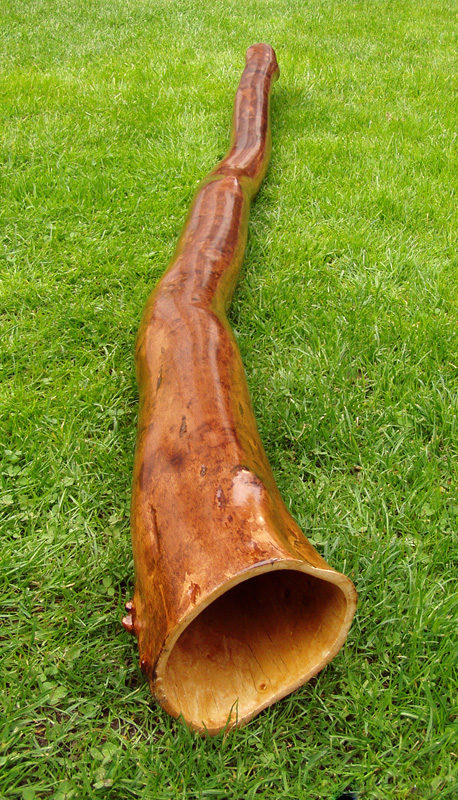
Didgeridoo
Brass (lip-vibrated aerophones)

Cornet
Brass (lip-vibrated aerophones)
Frequently asked questions
What does a sudrophone sound like?
As one of the brass, its sound comes from the way the player's buzzing lips set the air column vibrating.
What type of instrument is the sudrophone?
It is classified as brass (lip-vibrated aerophones) (Hornbostel–Sachs 423.232.2).
Sources & credits
- Wikidata Q3976676 – CC0
- Wikipedia: Sudrophone – CC BY-SA 4.0
- Image by St Cecilia's Hall Concert Room & Music Museum, Musical Instruments Museums Edinburgh; photographed by Antonia Reeve… – CC BY 3.0