How the trombonium makes its sound
In the Hornbostel–Sachs system, which classifies instruments by how they produce sound, the trombonium belongs to the brass (lip-vibrated aerophones): the player's buzzing lips set the air column vibrating – trumpets, horns, trombones, tubas and the didgeridoo.
More broadly it is one of the aerophones (wind instruments), where sound comes from vibrating air.
Press play above and watch the spectrum: the evenly spaced peaks are harmonics, and their relative strength is what gives the instrument its character.
From Wikipedia
The trombonium is a valve trombone in upright form, formerly manufactured by E. H. White under its "King" label. It was unveiled by H.N. White in 1938 and manufactured until the mid 1970s. In the early 1970s, C. G. Conn also manufactured a similar instrument as their 90G model valve trombone.
The trombonium has a timbre similar to a trombone. It is built with valves instead of a slide, in a compact upright form superficially resembling a baritone or euphonium, suitable for use in marching bands. A similar-sounding marching trombone is the flugabone, which is wrapped similar to a bass trumpet. The trombonium was used by the University of Southern California Marching Band and on a handful of jazz recordings (e.g., Jay and Kai + 6).
Other brass

Trumpet
Brass (lip-vibrated aerophones)

Trombone
Brass (lip-vibrated aerophones)

Tuba
Brass (lip-vibrated aerophones)

French horn
Brass (lip-vibrated aerophones)

Brass instrument
Brass (lip-vibrated aerophones)

Vuvuzela
Brass (lip-vibrated aerophones)
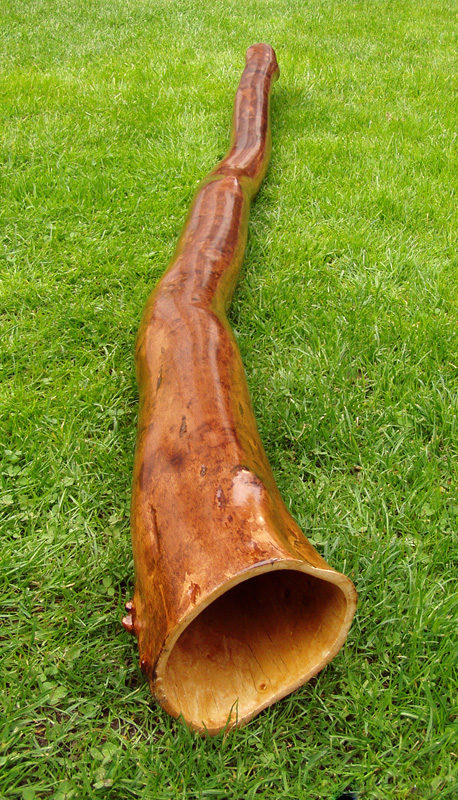
Didgeridoo
Brass (lip-vibrated aerophones)

Cornet
Brass (lip-vibrated aerophones)
Frequently asked questions
What does a trombonium sound like?
As one of the brass, its sound comes from the way the player's buzzing lips set the air column vibrating.
What type of instrument is the trombonium?
It is classified as brass (lip-vibrated aerophones) (Hornbostel–Sachs 423.233.2).
Sources & credits
- Wikidata Q28401550 – CC0
- Wikipedia: Trombonium – CC BY-SA 4.0
- Image by University of Edinburgh – CC BY 3.0