Listen to the Decula Periodical Cicada
Tip: press play to see the sound's live frequency spectrum in blue over the waveform.
About the Decula Periodical Cicada
The Decula Periodical Cicada is a insect in the family Cicadidae (order Hemiptera). Its conservation status on the IUCN Red List is “near threatened”.
What does the Decula Periodical Cicada sound like?
Insects make sound mechanically: crickets and grasshoppers rub a scraper against a file (stridulation), cicadas buckle ribbed membranes called tymbals, and bees and mosquitoes hum with their wingbeats.
From Wikipedia
Magicicada septendecula is a species of insect in family Cicadidae. It is endemic to the United States.
Related insects in the genus Magicicada
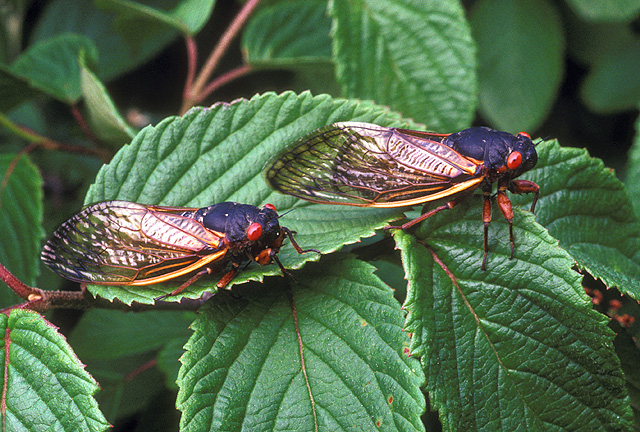

More from the family Cicadidae

Tanna japonensis
Tanna japonensis
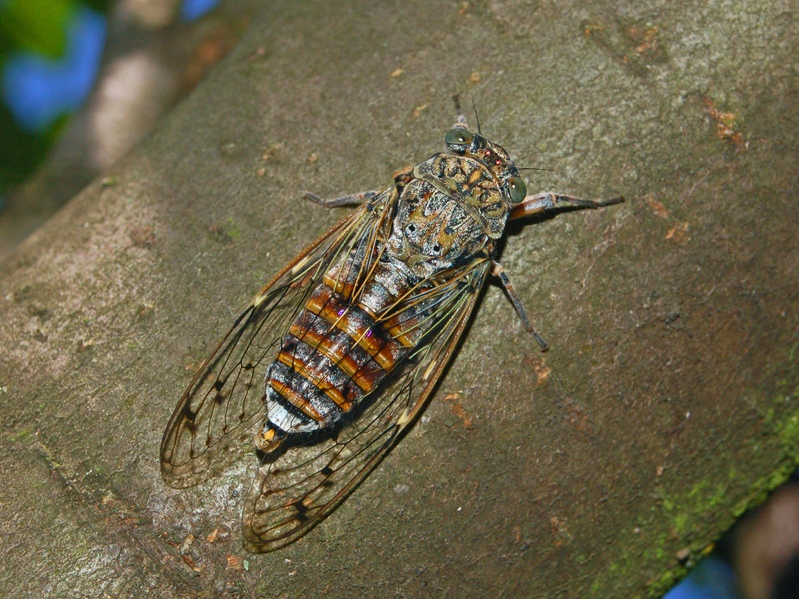
Cicada orni
Cicada orni

Graptopsaltria nigrofuscata
Graptopsaltria nigrofuscata

Sinfonia opalifera
Meimuna opalifera

Chorus cicada
Amphipsalta zelandica

Platypleura haglundi
Platypleura haglundi

Platypleura divisa
Platypleura divisa

Psaltoda plaga
Psaltoda plaga

Cystosoma saundersii
Cystosoma saundersii

Platypleura mijburghi
Platypleura mijburghi
Frequently asked questions
What does a Decula Periodical Cicada sound like?
You can hear 1 recording of the Decula Periodical Cicada on this page. Insects make sound mechanically: crickets and grasshoppers rub a scraper against a file (stridulation), cicadas buckle ribbed membranes called tymbals, and bees and mosquitoes hum with their wingbeats.
Is the Decula Periodical Cicada endangered?
The IUCN Red List classifies the Decula Periodical Cicada as “near threatened”.
What family does the Decula Periodical Cicada belong to?
The Decula Periodical Cicada (Magicicada septendecula) belongs to the family Cicadidae in the order Hemiptera.
Sources & credits
- Calling song of Magicicada septendecula - pone.0000892.s003 by Fontaine K, Cooley J, Simon C – CC BY 2.5 · Wikimedia Commons
- Wikidata Q2213615 – CC0
- Wikipedia: Magicicada septendecula – CC BY-SA 4.0
- Photo by Fontaine K, Cooley J, Simon C (2007) – CC BY 2.5