Listen to the Graptopsaltria nigrofuscata
Tip: press play to see the sound's live frequency spectrum in blue over the waveform.
About the Graptopsaltria nigrofuscata
The Graptopsaltria nigrofuscata is a insect in the family Cicadidae (order Hemiptera).
What does the Graptopsaltria nigrofuscata sound like?
Insects make sound mechanically: crickets and grasshoppers rub a scraper against a file (stridulation), cicadas buckle ribbed membranes called tymbals, and bees and mosquitoes hum with their wingbeats.
From Wikipedia
Graptopsaltria nigrofuscata, the large brown cicada, is a species of cicada in the genus Graptopsaltria of the family Cicadidae found across East Asia, including Japan, the Korean Peninsula, and China. They are called aburazemi (アブラゼミ) in Japanese. The males make a loud chirping that ends with a click caused by a flick of the wings.
More from the family Cicadidae

Tanna japonensis
Tanna japonensis
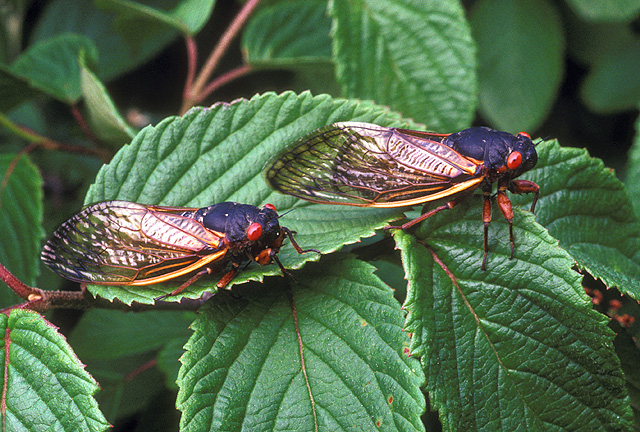
Decim periodical cicada
Magicicada septendecim
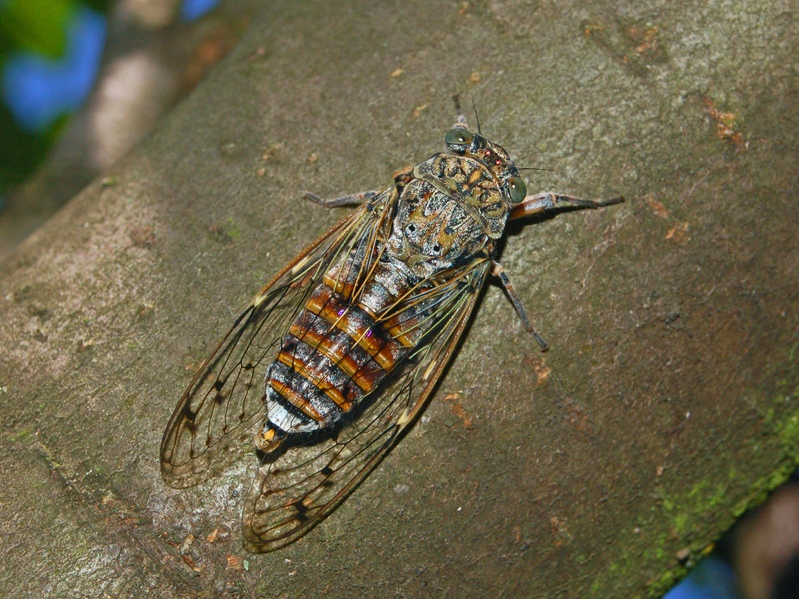
Cicada orni
Cicada orni

Cassini periodical cicada
Magicicada cassini

Decula Periodical Cicada
Magicicada septendecula

Sinfonia opalifera
Meimuna opalifera

Chorus cicada
Amphipsalta zelandica

Platypleura haglundi
Platypleura haglundi

Platypleura divisa
Platypleura divisa

Psaltoda plaga
Psaltoda plaga

Cystosoma saundersii
Cystosoma saundersii

Platypleura mijburghi
Platypleura mijburghi
Frequently asked questions
What does a Graptopsaltria nigrofuscata sound like?
You can hear 1 recording of the Graptopsaltria nigrofuscata on this page. Insects make sound mechanically: crickets and grasshoppers rub a scraper against a file (stridulation), cicadas buckle ribbed membranes called tymbals, and bees and mosquitoes hum with their wingbeats.
What family does the Graptopsaltria nigrofuscata belong to?
The Graptopsaltria nigrofuscata (Graptopsaltria nigrofuscata) belongs to the family Cicadidae in the order Hemiptera.
Sources & credits
- Aburazemi 07z7315 by ISAKA Yoji ( cory ) [ Recent works / Other works ] – CC BY 2.1 · Wikimedia Commons
- Wikidata Q904355 – CC0
- Wikipedia: Graptopsaltria nigrofuscata – CC BY-SA 4.0
- Photo by 池田正樹 – CC BY-SA 3.0