How the arpa jarocha makes its sound
In the Hornbostel–Sachs system, which classifies instruments by how they produce sound, the arpa jarocha belongs to the harps: strings run at an angle away from the soundboard, each plucked open.
More broadly it is one of the chordophones (string instruments), where sound comes from vibrating strings, amplified by a resonating body.
Players shape its sound through technique and materials; the resonating body filters the raw vibration, boosting some harmonics and damping others.
From Wikipedia
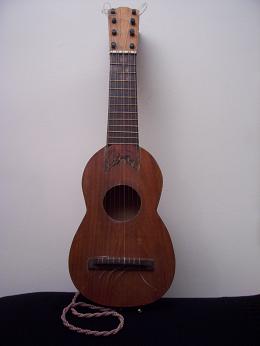
The arpa jarocha is a large wooden harp that is normally played while standing, although early examples from the 16th through the first three or four decades of the 19th centuries were smaller and were played while seated. It has a wooden frame, a resonator, a flat soundboard, 32-36 nylon strings (originally, gut strings), and does not have pedals. This harp is tuned diatonically over five octaves. The top of its soundboard sometimes arches outward due to the tension of the strings. Unlike other Mexican harps, the arpa jarocha has its sound holes located on the back of the soundboard instead of on the front.
Other harps


More instruments from Mexico




Frequently asked questions
What does an arpa jarocha sound like?
As one of the harps, its sound comes from the way strings run at an angle away from the soundboard, each plucked open.
What type of instrument is the arpa jarocha?
It is classified as harps (Hornbostel–Sachs 322.211-5).
Where does the arpa jarocha come from?
The arpa jarocha originates from Mexico.
Sources & credits
- Wikidata Q4795697 – CC0
- Wikipedia: Arpa jarocha – CC BY-SA 4.0
- Image by Koffermejia – CC BY-SA 4.0