How the blowing horn makes its sound
In the Hornbostel–Sachs system, which classifies instruments by how they produce sound, the blowing horn belongs to the brass (lip-vibrated aerophones): the player's buzzing lips set the air column vibrating – trumpets, horns, trombones, tubas and the didgeridoo.
More broadly it is one of the aerophones (wind instruments), where sound comes from vibrating air.
Its timbre – the colour that lets you tell it apart from other instruments playing the same note – comes from the mix of overtones its body and resonator emphasise.
From Wikipedia
The blowing horn or winding horn is a sound device that is usually made of or shaped like an animal horn, arranged to blow from a hole in the pointed end of it. This rudimentary device had a variety of functions in many cultures, in most cases reducing its scope to exhibiting, celebratory or group identification purposes (signal instrument). On the other hand, it has kept its function and profile in many cattle raising, agricultural and hunter-gatherer societies.
Other brass

Trumpet
Brass (lip-vibrated aerophones)

Trombone
Brass (lip-vibrated aerophones)

Tuba
Brass (lip-vibrated aerophones)

French horn
Brass (lip-vibrated aerophones)

Brass instrument
Brass (lip-vibrated aerophones)

Vuvuzela
Brass (lip-vibrated aerophones)
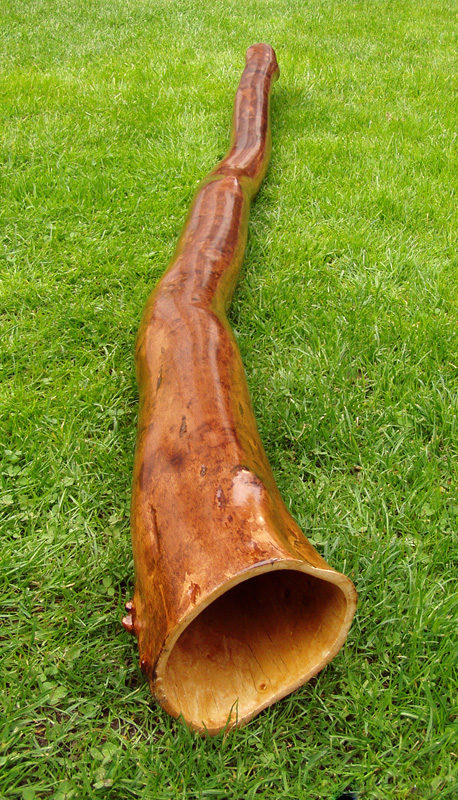
Didgeridoo
Brass (lip-vibrated aerophones)

Cornet
Brass (lip-vibrated aerophones)
Frequently asked questions
What does a blowing horn sound like?
As one of the brass, its sound comes from the way the player's buzzing lips set the air column vibrating.
What type of instrument is the blowing horn?
It is classified as brass (lip-vibrated aerophones) (Hornbostel–Sachs 423.121.2).
Sources & credits
- Wikidata Q2665724 – CC0
- Wikipedia: Blowing horn – CC BY-SA 4.0
- Image by Wojsyl – CC BY-SA 3.0