How the bucium makes its sound
In the Hornbostel–Sachs system, which classifies instruments by how they produce sound, the bucium belongs to the brass (lip-vibrated aerophones): the player's buzzing lips set the air column vibrating – trumpets, horns, trombones, tubas and the didgeridoo.
More broadly it is one of the aerophones (wind instruments), where sound comes from vibrating air.
Players shape its sound through technique and materials; the resonating body filters the raw vibration, boosting some harmonics and damping others.
From Wikipedia
The bucium is a type of alphorn from Romania and Moldova. The word is derived from Latin bucinum, originally meaning "curved horn", an instrument used by the Romans. The word is a cognate with English "bugle".
A bucium may have either a straight or curved tube, and may be conical throughout its entire length or only in the bell. Its tube, which measures 1.5 to over 3 meters in length, may be made from fir, ash, limetree, or hazel wood and bound with birch, cherry, or lime bark. Northern Romanian versions of the bucium may incorporate metal as well. Most versions of the bucium are played by blowing into a trumpet-shaped wooden mouthpiece.
Other brass

Trumpet
Brass (lip-vibrated aerophones)

Trombone
Brass (lip-vibrated aerophones)

Tuba
Brass (lip-vibrated aerophones)

French horn
Brass (lip-vibrated aerophones)

Brass instrument
Brass (lip-vibrated aerophones)

Vuvuzela
Brass (lip-vibrated aerophones)
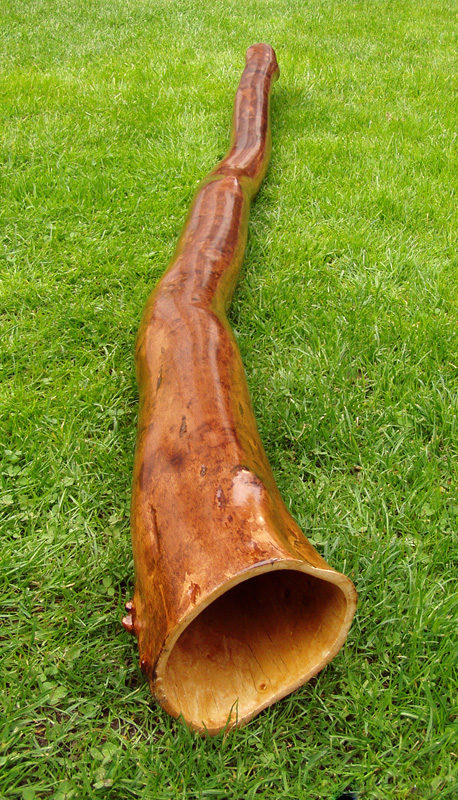
Didgeridoo
Brass (lip-vibrated aerophones)

Cornet
Brass (lip-vibrated aerophones)
Frequently asked questions
What does a bucium sound like?
As one of the brass, its sound comes from the way the player's buzzing lips set the air column vibrating.
What type of instrument is the bucium?
It is classified as brass (lip-vibrated aerophones) (Hornbostel–Sachs 423.121.11).
Sources & credits
- Wikidata Q518585 – CC0
- Wikipedia: Bucium – CC BY-SA 4.0
- Image by Spiridon Ion Cepleanu – CC BY-SA 4.0