How the ophicleide makes its sound
In the Hornbostel–Sachs system, which classifies instruments by how they produce sound, the ophicleide belongs to the brass (lip-vibrated aerophones): the player's buzzing lips set the air column vibrating – trumpets, horns, trombones, tubas and the didgeridoo.
More broadly it is one of the aerophones (wind instruments), where sound comes from vibrating air.
Its timbre – the colour that lets you tell it apart from other instruments playing the same note – comes from the mix of overtones its body and resonator emphasise.
From Wikipedia
The ophicleide ( OFF-ih-klyde) is a family of conical-bore keyed brass instruments invented in early 19th-century France to extend the keyed bugle into the lower range. Of these, the bass ophicleide in eight-foot (8′) C or 9′ B♭ took root over the course of the 19th century in military bands and as the bass of orchestral brass sections throughout Western Europe, replacing the serpent and its later upright derivatives. By the end of the 19th century, however, it had been largely superseded, in bands by the euphonium and in orchestras by early forms of the modern tuba, some developed from valved ophicleides. The late 20th century saw a revival of interest in the instrument for historically informed performance practice, and ophicleides are built by a small number of manufacturers.
Other brass

Trumpet
Brass (lip-vibrated aerophones)

Trombone
Brass (lip-vibrated aerophones)

Tuba
Brass (lip-vibrated aerophones)

French horn
Brass (lip-vibrated aerophones)

Brass instrument
Brass (lip-vibrated aerophones)

Vuvuzela
Brass (lip-vibrated aerophones)
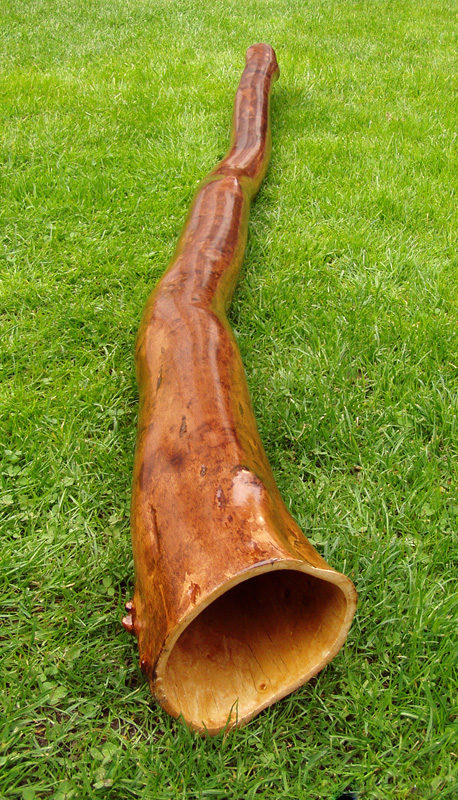
Didgeridoo
Brass (lip-vibrated aerophones)

Cornet
Brass (lip-vibrated aerophones)
More instruments from France

Accordion
Free reeds and interruptive aerophones

Hurdy-gurdy
Lutes

Barrel organ
Flutes (edge-blown)
Tambourine de Bearn
struck string instrument; zither

Luthéal
hybrid piano with an attachment for changing timbre

Cannone da 75/27 modello 11
1912 Italian 75 mm field gun

Selmer guitar
acoustic guitar manufactured by Henri Selmer Paris

Quinton
Lutes
Frequently asked questions
What does an ophicleide sound like?
As one of the brass, its sound comes from the way the player's buzzing lips set the air column vibrating.
What type of instrument is the ophicleide?
It is classified as brass (lip-vibrated aerophones) (Hornbostel–Sachs 423.21).
Where does the ophicleide come from?
The ophicleide originates from France.
Sources & credits
- Wikidata Q200823 – CC0
- Wikipedia: Ophicleide – CC BY-SA 4.0
- Image by Rijksmuseum – CC0 1.0