Listen to the Whistled language of Aas
Tip: press play to see the sound's live frequency spectrum in blue over the waveform.
From Wikipedia
The whistled language of Aas (in French: langage sifflé d'Aas, occitan sifflé d'Aas; in Occitan: siular d'Aas) is a whistled language used in the Pyrennees village of Aas, located in the Béarn area of southern France. Local pastoral activities and shepherds benefited from long distant communication allowed by whistled and the mountainous topography. Whistled Occitan is based on the local Béarnese dialect of Gascon, itself often regarded as a dialect of Occitan. According to Philippe Biu, it is "a practice known as the whistled language of Aas, but above all it is a technique [allowing] speech to be transposed as whistling".
More instruments from France

Accordion
Free reeds and interruptive aerophones

Hurdy-gurdy
Lutes

Barrel organ
Flutes (edge-blown)

Ophicleide
Brass (lip-vibrated aerophones)
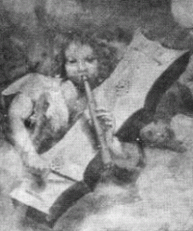
Tambourine de Bearn
struck string instrument; zither

Luthéal
hybrid piano with an attachment for changing timbre

Cannone da 75/27 modello 11
1912 Italian 75 mm field gun

Selmer guitar
acoustic guitar manufactured by Henri Selmer Paris
Frequently asked questions
What does the Whistled language of Aas sound like?
Listen to 2 recordings on this page.
Where does the Whistled language of Aas come from?
The Whistled language of Aas originates from France.
Sources & credits
- LL-Q117707514 (oci-whistled)-Univòc64-Aas by Speaker: Univòc64 Recorder: Univòc64 – CC0 1.0 · Wikimedia Commons
- LL-Q117707514 (oci-whistled)-Univòc64-Auloron-Senta-Maria by Speaker: Univòc64 Recorder: Univòc64 – CC0 1.0 · Wikimedia Commons
- Wikidata Q117707514 – CC0
- Wikipedia: Whistled language of Aas – CC BY-SA 4.0
- Image by No machine-readable author provided. Marc.sagnier assumed (based on copyright claims). – CC BY-SA 2.5