How the xirula makes its sound
In the Hornbostel–Sachs system, which classifies instruments by how they produce sound, the xirula belongs to the flutes (edge-blown): an air jet is split on a sharp edge, setting the air column vibrating – flutes, recorders, whistles and panpipes.
More broadly it is one of the aerophones (wind instruments), where sound comes from vibrating air.
Its timbre – the colour that lets you tell it apart from other instruments playing the same note – comes from the mix of overtones its body and resonator emphasise.
From Wikipedia
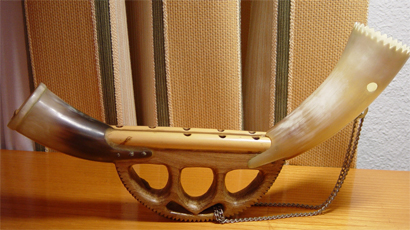
The xirula (Basque pronunciation: [ʃiˈɾula], spelled chiroula in French, also pronounced txirula, (t)xülüla in Zuberoan Basque; Gascon: flabuta; French: galoubet) is a small three holed woodwind instrument or flute usually made of wood akin to the Basque txistu or three-hole pipe, but more high pitched and strident, tuned to D/G and an octave higher than the silbote. The sound that flows from the flute has often been perceived as a metaphor for the tweet cadences of bird songs. Some scholars point out that flutes found in the Caverns of Isturitz and Oxozelaia going back to a period spanning 35,000 to 10,000 years ago bear witness to the early presence of the instrument's forerunner in the region, while this view has been disputed.
Other flutes


More instruments from Spain


Frequently asked questions
What does a xirula sound like?
As one of the flutes, its sound comes from the way an air jet is split on a sharp edge, setting the air column vibrating.
What type of instrument is the xirula?
It is classified as flutes (edge-blown) (Hornbostel–Sachs 421.221.12).
Where does the xirula come from?
The xirula originates from Spain and Béarn.
Sources & credits
- Wikidata Q8044776 – CC0
- Wikipedia: Xirula – CC BY-SA 4.0
- Image by Soinuenea – CC BY-SA 4.0