Listen to the Dyticopycna semiclara
Tip: press play to see the sound's live frequency spectrum in blue over the waveform.
About the Dyticopycna semiclara
The Dyticopycna semiclara is a insect in the family Cicadidae (order Hemiptera).
What does the Dyticopycna semiclara sound like?
Insects make sound mechanically: crickets and grasshoppers rub a scraper against a file (stridulation), cicadas buckle ribbed membranes called tymbals, and bees and mosquitoes hum with their wingbeats.
From Wikipedia
Dyticopycna semiclara, the whining forest cicada, is a South African forest-dwelling platypleurine cicada; it is the type species of the genus Dyticopycna, having been placed previously in Pycna and other genera before revision in 2020.
One of the largest cicadas in South Africa, this species reaches 40–50 mm in length. Its wings display green, brown, and translucent patches, and are covered with silvery hairs. It is endemic to South Africa and occurs in the Eastern Cape, KwaZulu-Natal, Mpumalanga, and Limpopo provinces. It prefers indigenous forests, where the undergrowth is sparse and trees are more than 4m tall, but may also be found in stands of Quercus robur, Populus deltoides, pine, and eucalyptus.
More from the family Cicadidae

Tanna japonensis
Tanna japonensis
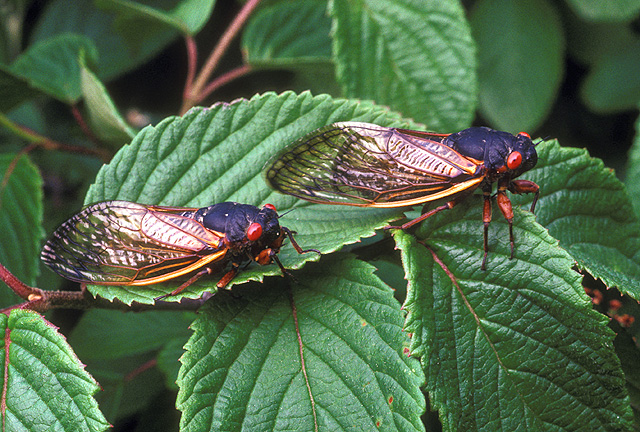
Decim periodical cicada
Magicicada septendecim
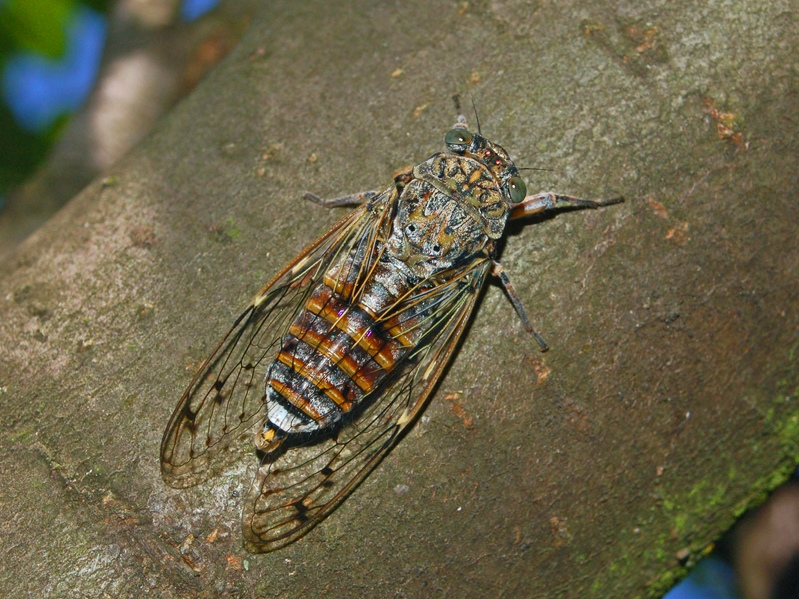
Cicada orni
Cicada orni

Cassini periodical cicada
Magicicada cassini

Graptopsaltria nigrofuscata
Graptopsaltria nigrofuscata

Decula Periodical Cicada
Magicicada septendecula

Sinfonia opalifera
Meimuna opalifera

Chorus cicada
Amphipsalta zelandica

Platypleura haglundi
Platypleura haglundi

Platypleura divisa
Platypleura divisa

Psaltoda plaga
Psaltoda plaga

Cystosoma saundersii
Cystosoma saundersii
Frequently asked questions
What does a Dyticopycna semiclara sound like?
You can hear 6 recordings of the Dyticopycna semiclara on this page. Insects make sound mechanically: crickets and grasshoppers rub a scraper against a file (stridulation), cicadas buckle ribbed membranes called tymbals, and bees and mosquitoes hum with their wingbeats.
What family does the Dyticopycna semiclara belong to?
The Dyticopycna semiclara (Pycna semiclara) belongs to the family Cicadidae in the order Hemiptera.
Sources & credits
- BioAcoustica MHV 916 P.semiclara nr Amajuba – CC BY 3.0 · Wikimedia Commons
- BioAcoustica MHV 925 P.semiclara nr Grasskop 1 – CC BY 3.0 · Wikimedia Commons
- BioAcoustica MHV 922 P.semiclara Woodcliffe Farm – CC BY 3.0 · Wikimedia Commons
- BioAcoustica MHV 931 P.semiclara Coffee Bay 2 – CC BY 3.0 · Wikimedia Commons
- BioAcoustica MHV 930 P.semiclara R614 nr Wartberg – CC BY 3.0 · Wikimedia Commons
- BioAcoustica MHV 925 P.semiclara nr Grasskop 2 – CC BY 3.0 · Wikimedia Commons
- Wikidata Q18346075 – CC0
- Wikipedia: Dyticopycna semiclara – CC BY-SA 4.0
- Photo by Adrian John Armstrong & Martin H. Villet – CC BY 4.0