How the kokle makes its sound
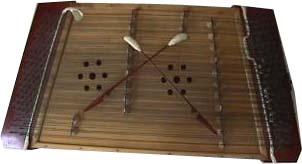
In the Hornbostel–Sachs system, which classifies instruments by how they produce sound, the kokle belongs to the board zithers: strings are stretched across a flat board or box – the family of the piano, harpsichord and hammered dulcimer.
More broadly it is one of the chordophones (string instruments), where sound comes from vibrating strings, amplified by a resonating body.
Its timbre – the colour that lets you tell it apart from other instruments playing the same note – comes from the mix of overtones its body and resonator emphasise.
From Wikipedia
Kokle or historically kokles (kūkles) is a Latvian plucked string instrument (chordophone) belonging to the Baltic box zither family known as the Baltic psaltery along with Lithuanian kanklės, Estonian kannel, Finnish kantele, and Russian krylovidnye gusli. The first possible kokles related archaeological findings in the territory of modern Latvia are from the 13th century, while the first reliable written information about kokles playing comes from the beginning of the 17th century. The first known kokles tune was notated in 1891, but the first kokles recordings into gramophone records and movies were made in the 1930s. Both kokles and kokles playing are included in the Latvian Culture Canon.
Other board zithers




More instruments from Latvia

Frequently asked questions
What does a kokle sound like?
As one of the board zithers, its sound comes from the way strings are stretched across a flat board or box.
What type of instrument is the kokle?
It is classified as board zithers (Hornbostel–Sachs 314.122-5).
Where does the kokle come from?
The kokle originates from Latvia.
Sources & credits
- Wikidata Q3504809 – CC0
- Wikipedia: Kokle – CC BY-SA 4.0
- Image by Turaids – CC BY-SA 4.0