How the qanun makes its sound
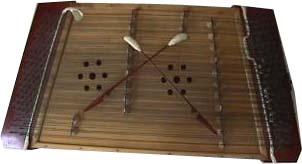
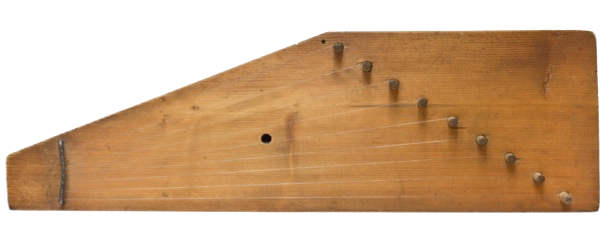
In the Hornbostel–Sachs system, which classifies instruments by how they produce sound, the qanun belongs to the board zithers: strings are stretched across a flat board or box – the family of the piano, harpsichord and hammered dulcimer.
More broadly it is one of the chordophones (string instruments), where sound comes from vibrating strings, amplified by a resonating body.
Players shape its sound through technique and materials; the resonating body filters the raw vibration, boosting some harmonics and damping others.
From Wikipedia
The qanun, kanun, ganoun or kanoon (Arabic: قانون, romanized: qānūn; Armenian: քանոն, romanized: k’anon; Sorani Kurdish: قانون, romanized: qānūn; Greek: κανονάκι, romanized: kanonáki, qanun; Persian: قانون, qānūn; Turkish: kanun; Azerbaijani: qanun; Uyghur: قالون, romanized: qalon) is a Middle Eastern string instrument played either solo, or more often as part of an ensemble, in much of Armenia, Iran, Modern Turkey, Greece, Arab East, and Maghreb region of North Africa; later, due to Arab migration, it reached West Africa and Central Asia. The instrument is a type of large zither with a thin trapezoidal soundboard that is famous for its unique melodramatic sound.
Other board zithers



Frequently asked questions
What does a qanun sound like?
As one of the board zithers, its sound comes from the way strings are stretched across a flat board or box.
What type of instrument is the qanun?
It is classified as board zithers (Hornbostel–Sachs 314.122-6).