How the mandolin makes its sound
In the Hornbostel–Sachs system, which classifies instruments by how they produce sound, the mandolin belongs to the lutes: strings run parallel to a soundboard and along a neck – the family of the guitar, violin, sitar and oud.
More broadly it is one of the chordophones (string instruments), where sound comes from vibrating strings, amplified by a resonating body.
Players shape its sound through technique and materials; the resonating body filters the raw vibration, boosting some harmonics and damping others.
From Wikipedia
A mandolin is a stringed musical instrument in the lute family and is generally plucked with a pick. It most commonly has four courses of doubled strings tuned in unison, thus giving a total of eight strings. A variety of string types are used, with steel strings being the most common and usually the least expensive. The courses are typically tuned in an interval of perfect fifths, with the same tuning as a violin (G3, D4, A4, E5). Also, like the violin, it is the soprano member of a family that includes the mandola, octave mandolin, mandocello and mandobass.
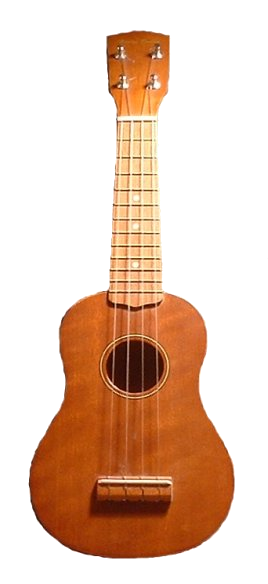
Other lutes


Questions people ask
Real questions from the Stack Exchange community – follow a link to read the discussion.
- Is my mandolin broken? · Music SE
Frequently asked questions
What does a mandolin sound like?
As one of the lutes, its sound comes from the way strings run parallel to a soundboard and along a neck.
What type of instrument is the mandolin?
It is classified as lutes (Hornbostel–Sachs 321.321-6).
Sources & credits
- Wikidata Q302497 – CC0
- Wikipedia: Mandolin – CC BY-SA 4.0
- Image by No machine-readable author provided. Arent assumed (based on copyright claims). – CC BY-SA 3.0