Listen to the violin
Tip: press play to see the sound's live frequency spectrum in blue over the waveform.
How the violin makes its sound
In the Hornbostel–Sachs system, which classifies instruments by how they produce sound, the violin belongs to the lutes: strings run parallel to a soundboard and along a neck – the family of the guitar, violin, sitar and oud.
More broadly it is one of the chordophones (string instruments), where sound comes from vibrating strings, amplified by a resonating body.
Press play above and watch the spectrum: the evenly spaced peaks are harmonics, and their relative strength is what gives the instrument its character.
Range of the violin
The typical range of the violin runs from G3 (196.0 Hz) to A7 (3,520 Hz) – about 4.2 octaves. Harmonics extend its sound far higher.
From Wikipedia
The violin, sometimes referred to as a fiddle, is a wooden chordophone, and is the smallest, and thus highest-pitched instrument (soprano) in regular use in the violin family. Smaller violin-type instruments exist, including the violino piccolo and the pochette, but these are virtually unused. Most violins have a hollow wooden body, and commonly have four strings (sometimes five), usually tuned in perfect fifths with notes G3, D4, A4, E5, and are most commonly played by drawing a bow across the strings. The violin can also be played by plucking the strings with the fingers (pizzicato) and, in specialized cases, by striking the strings with the wooden side of the bow (col legno).
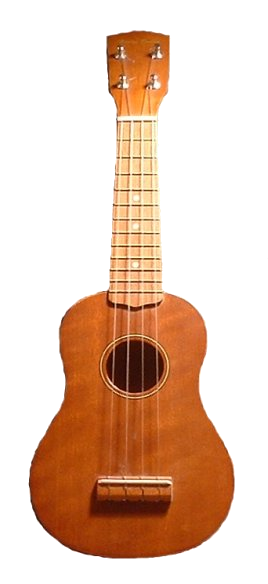
Other lutes


Questions people ask
Real questions from the Stack Exchange community – follow a link to read the discussion.
- Why is the double bass the only instrument in the violin family tuned in fourths? · Music SE
- Why are violin bows longer than viola bows, than cello bows, than double-bass bows ? · Music SE
- Do I need a teacher to learn violin? · Music SE
- What to choose? Violin or piano? · Music SE
- Why does violin sound differently after playing on it for some time? · Music SE
Frequently asked questions
What does a violin sound like?
Listen to 5 recordings on this page. As one of the lutes, its sound comes from the way strings run parallel to a soundboard and along a neck.
What type of instrument is the violin?
It is classified as lutes (Hornbostel–Sachs 321.322-71).
Sources & credits
- Whiskey-youre-the-devil-violin – CC BY-SA 2.0 · Wikimedia Commons
- Corelli Violin Sonata Op 5 No 9, performing version by Geminiani by Corelli – Public domain · Wikimedia Commons
- Berg Violin Concerto, 1st movement closing bars by Alban Berg – Public domain · Wikimedia Commons
- PDP-CH - Adolf Busch, violin and Rudolf Serkin, piano - Violin Sonata in G major, BWV… – Public domain · Wikimedia Commons
- PDP-CH - Georg Kulenkampff, violin with the Berlin Philharmonic, Paul Kletzki - Romance… – Public domain · Wikimedia Commons
- Wikidata Q8355 – CC0
- Wikipedia: Violin – CC BY-SA 4.0
- Image by Just plain Bill – CC0 1.0