Listen to the đàn môi
Tip: press play to see the sound's live frequency spectrum in blue over the waveform.
How the đàn môi makes its sound
In the Hornbostel–Sachs system, which classifies instruments by how they produce sound, the đàn môi belongs to the plucked idiophones (lamellophones): flexible tongues or lamellae are plucked – the mbira, kalimba, music box and jaw harp.
More broadly it is one of the idiophones, where the solid body of the instrument itself vibrates, without strings or a stretched membrane.
Players shape its sound through technique and materials; the resonating body filters the raw vibration, boosting some harmonics and damping others.
From Wikipedia
Đàn môi (lit. 'lip lute') is the Vietnamese name of a traditional musical instrument widely used by the minority ethnic groups of Vietnam (including the Jrai "Rang Leh"). It was derived from the mouth harp of the Hmong people.
An inward-orientated lamellophone, the đàn môi is a noncomposite brass mouth harp. Unlike the jaw harp, which is held against the teeth while being played, the đàn môi is held against the lips while the lamella is plucked. This gives much more flexibility to the player, leaving them freer to shape their oral cavity as a resonance chamber to amplify the instrument. It is often enclosed in a wooden or bamboo box when stored.
Other plucked idiophones

Jew's harp
Plucked idiophones (lamellophones)

Mbira
Plucked idiophones (lamellophones)
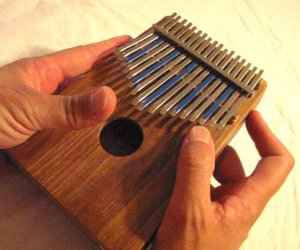
Lamellophone
Plucked idiophones (lamellophones)

Kouxian
Plucked idiophones (lamellophones)

Ōtsuzumi
Plucked idiophones (lamellophones)
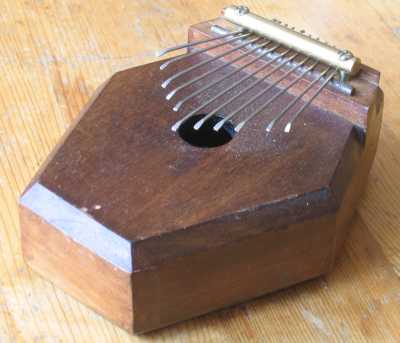
Kalimba
Plucked idiophones (lamellophones)
Agidigbo
Plucked idiophones (lamellophones)

Ikembe
Plucked idiophones (lamellophones)
More instruments from Vietnam

Frequently asked questions
What does a đàn môi sound like?
Listen to 1 recording on this page. As one of the plucked idiophones, its sound comes from the way flexible tongues or lamellae are plucked.
What type of instrument is the đàn môi?
It is classified as plucked idiophones (lamellophones) (Hornbostel–Sachs 121.2).
Where does the đàn môi come from?
The đàn môi originates from Vietnam.
Sources & credits
- Dan moi by Cassa342 – CC BY-SA 4.0 · Wikimedia Commons
- Wikidata Q2442891 – CC0
- Wikipedia: Đàn môi – CC BY-SA 4.0
- Image by Codell – Public domain