How the baritone saxophone makes its sound
In the Hornbostel–Sachs system, which classifies instruments by how they produce sound, the baritone saxophone belongs to the single-reed instruments: a single reed beats against a mouthpiece – clarinets and saxophones.
More broadly it is one of the aerophones (wind instruments), where sound comes from vibrating air.
Players shape its sound through technique and materials; the resonating body filters the raw vibration, boosting some harmonics and damping others.
From Wikipedia
The baritone saxophone, commonly abbreviated to "bari sax", is a member of the saxophone family of instruments, larger (and lower-pitched) than the tenor saxophone, but smaller (and higher-pitched) than the bass. It is the lowest-pitched saxophone in common use – the bass, contrabass and subcontrabass saxophones are relatively uncommon. Like all saxophones, it is a single-reed instrument. It is commonly used in concert bands, chamber music, military bands, big bands, and jazz combos. It can also be found in other ensembles such as rock bands and marching bands. Modern baritone saxophones are pitched in E♭.
Other single-reed instruments


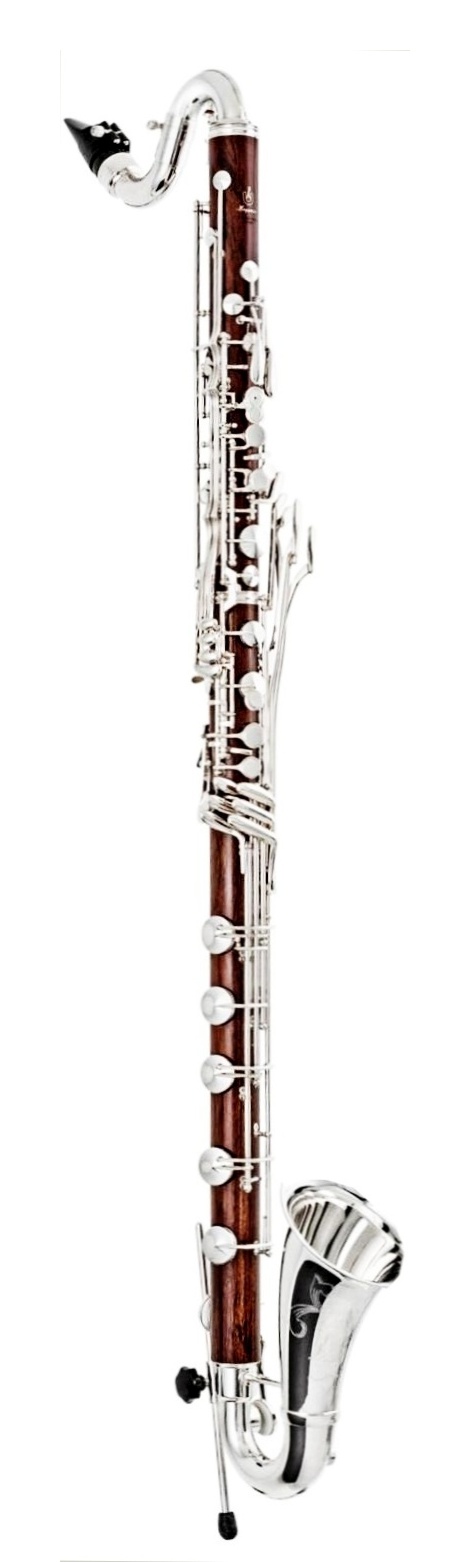


Frequently asked questions
What does a baritone saxophone sound like?
As one of the single-reed instruments, its sound comes from the way a single reed beats against a mouthpiece.
What type of instrument is the baritone saxophone?
It is classified as single-reed instruments (Hornbostel–Sachs 422.212-71).
Sources & credits
- Wikidata Q808218 – CC0
- Wikipedia: Baritone saxophone – CC BY-SA 4.0
- Image by Amati Kraslice – CC BY-SA 4.0