Listen to the bodhrán
Tip: press play to see the sound's live frequency spectrum in blue over the waveform.
How the bodhrán makes its sound
In the Hornbostel–Sachs system, which classifies instruments by how they produce sound, the bodhrán belongs to the struck drums: a stretched membrane (drumhead) is struck with hands or beaters.
More broadly it is one of the membranophones (drums), where sound comes from a vibrating stretched membrane.
Its timbre – the colour that lets you tell it apart from other instruments playing the same note – comes from the mix of overtones its body and resonator emphasise.
From Wikipedia
The bodhrán is a frame drum used in Irish music ranging from 25 to 65 cm (10–26 in) in diameter, with most drums measuring 35–45 cm (14–18 in). The sides of the drum are 9–20 cm (3+1⁄2–8 in) deep. A goatskin hide is tacked to one side (synthetic heads or other animal skins are sometimes used). The other side is open-ended for one hand to be placed against the inside of the drum head to control the pitch and timbre.
One or two crossbars, sometimes removable, may be inside the frame. Some professional modern bodhráns integrate mechanical tuning systems similar to those used on drums found in drum kits. It is usually with a hex key that the bodhrán skins are tightened or loosened depending on the atmospheric conditions.
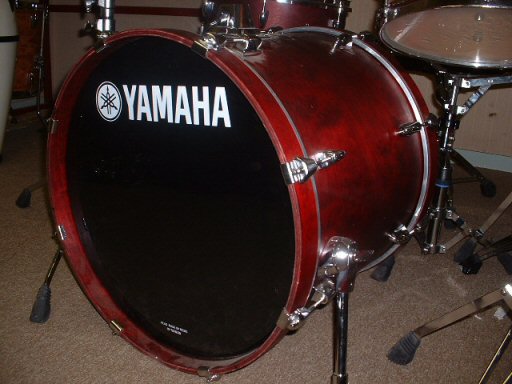
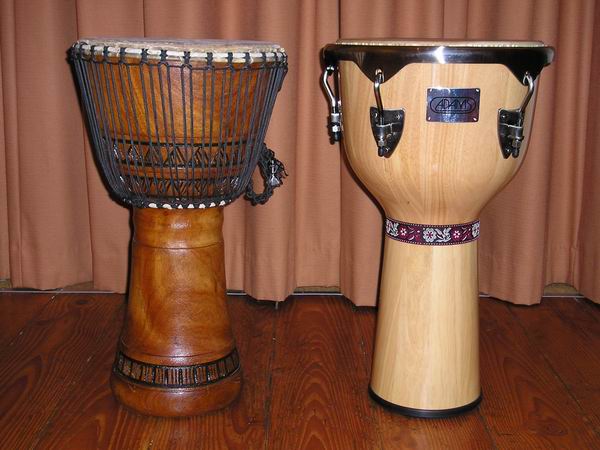
Other struck drums



Frequently asked questions
What does a bodhrán sound like?
Listen to 2 recordings on this page. As one of the struck drums, its sound comes from the way a stretched membrane (drumhead) is struck with hands or beaters.
What type of instrument is the bodhrán?
It is classified as struck drums (Hornbostel–Sachs 211.311).
Sources & credits
- Bodhran-improvisation hinnerk-ruemenapf by Hinnerk R Hinnerk Rümenapf – CC BY-SA 3.0 · Wikimedia Commons
- Bodhrán by Leah Ní Chaiside – CC BY-SA 4.0 · Wikimedia Commons
- Wikidata Q244976 – CC0
- Wikipedia: Bodhrán – CC BY-SA 4.0
- Image – CC BY-SA 3.0