Listen to the tabla
Tip: press play to see the sound's live frequency spectrum in blue over the waveform.
How the tabla makes its sound
In the Hornbostel–Sachs system, which classifies instruments by how they produce sound, the tabla belongs to the struck drums: a stretched membrane (drumhead) is struck with hands or beaters.
More broadly it is one of the membranophones (drums), where sound comes from a vibrating stretched membrane.
Its timbre – the colour that lets you tell it apart from other instruments playing the same note – comes from the mix of overtones its body and resonator emphasise.
From Wikipedia
The tabla is a pair of hand drums from South Asia, particularly the Indian subcontinent. Since the 18th century, it has been the principal percussion instrument in Hindustani classical music, where it may be played solo, as an accompaniment with other instruments and vocals, or as a part of larger ensembles. It is frequently played in traditional, popular and folk music performances in India, Bangladesh, Afghanistan, Pakistan, Nepal, and Sri Lanka. The tabla is an essential instrument in the bhakti devotional traditions of Hinduism and Sikhism, such as during bhajan and kirtan singing. It is one of the main qawwali instruments used by Sufi musicians. The instrument also features in dance performances such as kathak.
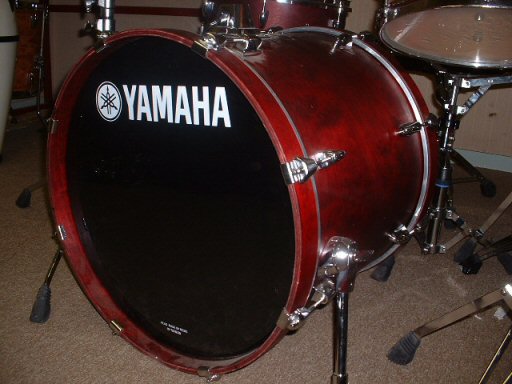
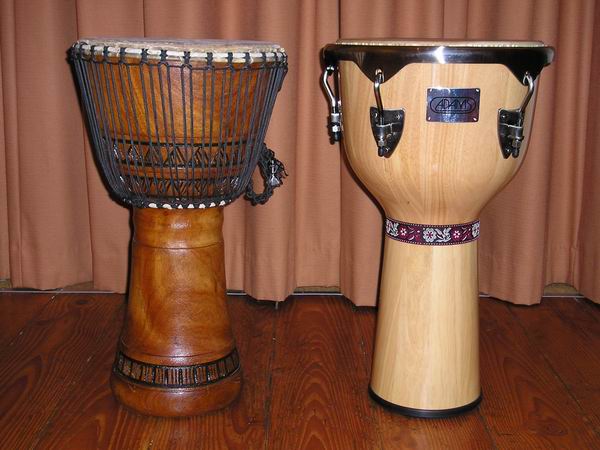
Other struck drums




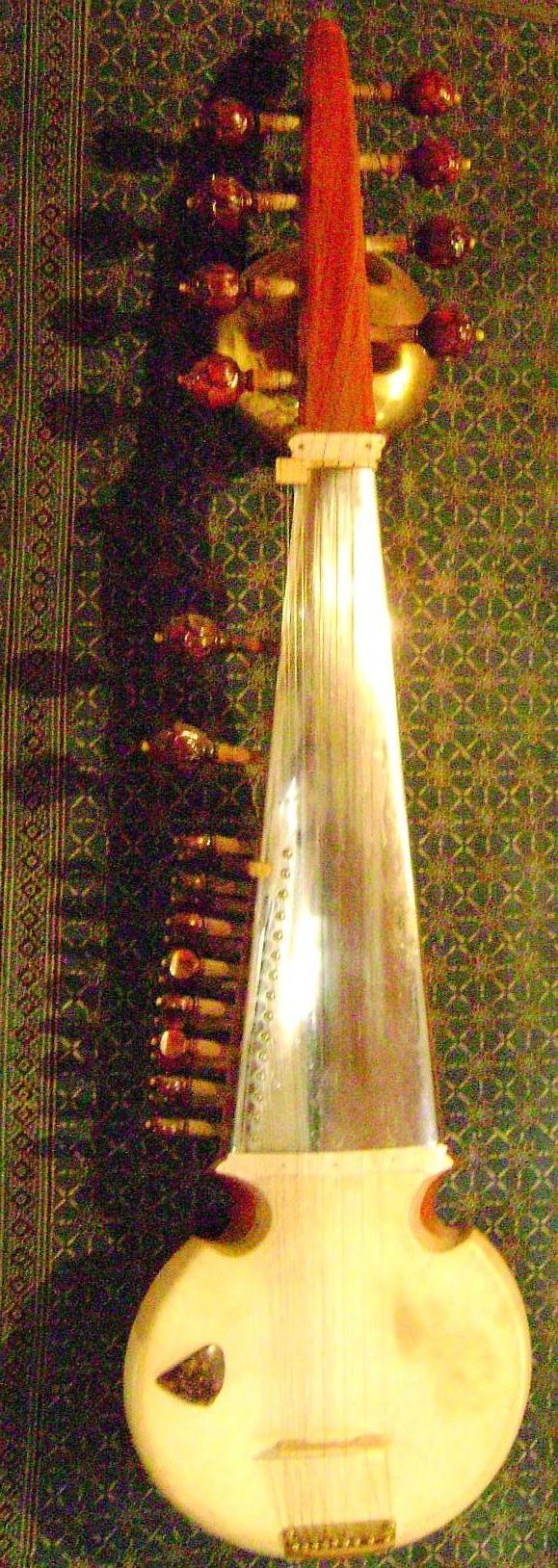
More instruments from India




Frequently asked questions
What does a tabla sound like?
Listen to 2 recordings on this page. As one of the struck drums, its sound comes from the way a stretched membrane (drumhead) is struck with hands or beaters.
What type of instrument is the tabla?
It is classified as struck drums (Hornbostel–Sachs 211.11).
Where does the tabla come from?
The tabla originates from India.
Sources & credits
- Rm-sursilv-la tabla da traffic by Speaker: Erwin Ardüser – CC0 1.0 · Wikimedia Commons
- Rm-sursilv-vid la tabla by Speaker: Erwin Ardüser – CC0 1.0 · Wikimedia Commons
- Wikidata Q213100 – CC0
- Wikipedia: Tabla – CC BY-SA 4.0
- Image by http://muzyczny.pl – CC BY-SA 4.0