How the drum kit makes its sound
In the Hornbostel–Sachs system, which classifies instruments by how they produce sound, the drum kit belongs to the struck drums: a stretched membrane (drumhead) is struck with hands or beaters.
More broadly it is one of the membranophones (drums), where sound comes from a vibrating stretched membrane.
Press play above and watch the spectrum: the evenly spaced peaks are harmonics, and their relative strength is what gives the instrument its character.
From Wikipedia
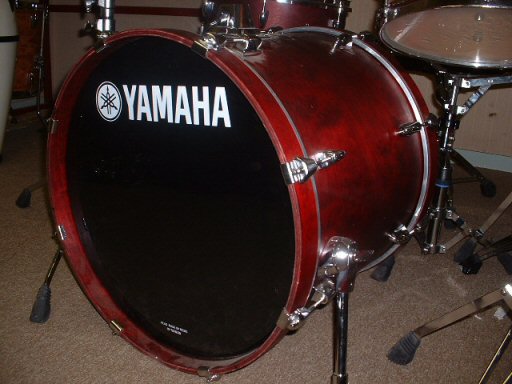
A drum kit, acoustic drum kit or drum set (also known as a trap set or simply drums in popular music and jazz contexts) is a musical instrument consisting of a collection of percussion instruments arranged to be played by a single musician. It typically includes drums, cymbals, and sometimes other auxiliary percussion instruments, such as a tambourine or a cowbell. The drummer usually plays while seated on a drum throne, using drumsticks or special wire or nylon brushes to strike the drums and cymbals, as well as pedals to operate the bass drum and hi-hat, allowing them to adapt the sound to their desired effect.
The drum set is not standardized, but usually consists of:
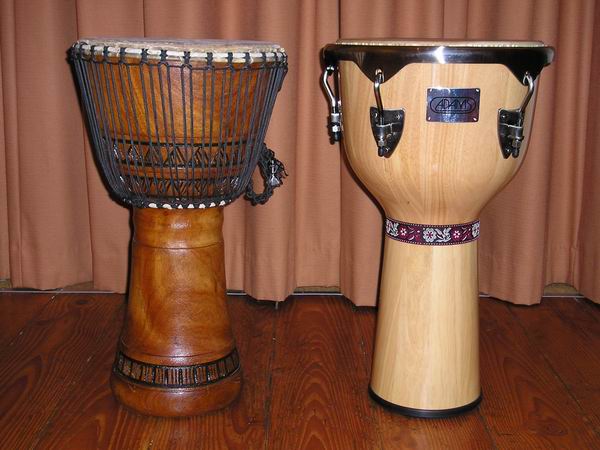
Other struck drums




Questions people ask
Real questions from the Stack Exchange community – follow a link to read the discussion.
Frequently asked questions
What does a drum kit sound like?
As one of the struck drums, its sound comes from the way a stretched membrane (drumhead) is struck with hands or beaters.
What type of instrument is the drum kit?
It is classified as struck drums (Hornbostel–Sachs 211.212.21).
Sources & credits
- Wikidata Q128309 – CC0
- Wikipedia: Drum kit – CC BY-SA 4.0
- Image by Danel Solabarrieta – CC BY-SA 2.5