How the snare drum makes its sound
In the Hornbostel–Sachs system, which classifies instruments by how they produce sound, the snare drum belongs to the struck drums: a stretched membrane (drumhead) is struck with hands or beaters.
More broadly it is one of the membranophones (drums), where sound comes from a vibrating stretched membrane.
Players shape its sound through technique and materials; the resonating body filters the raw vibration, boosting some harmonics and damping others.
From Wikipedia
The snare drum (or side drum) is a percussion instrument that produces a sharp staccato sound when the top head is struck with a drum stick which is held under tension against the lower head. Snare drums are often used in orchestras, concert bands, marching bands, parades, drumlines, drum corps, and more. It is one of the central pieces in a drum set, a collection of percussion instruments designed to be played by a seated drummer and used in many genres of music. Because basic rhythms are very easy to learn to play on a snare drum even for children, the instrument is also suitable for the music education for young children and for a rhythm band.
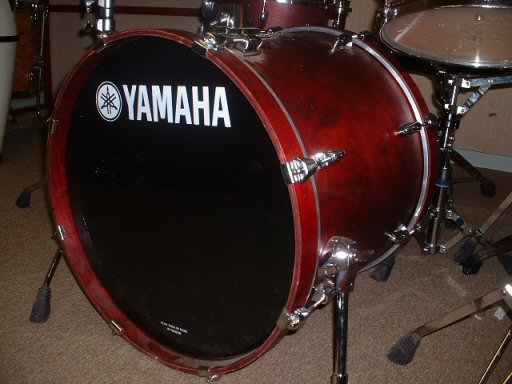
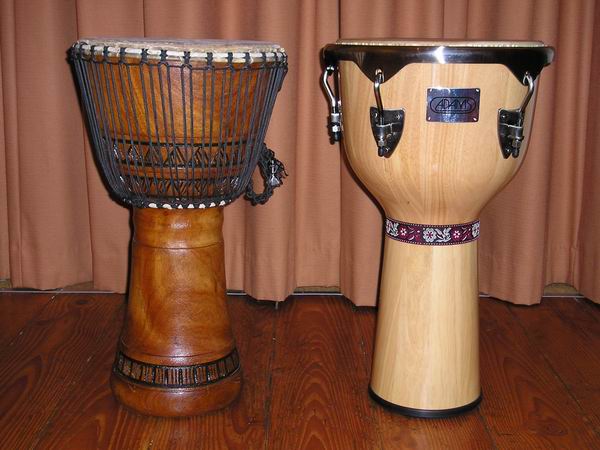
Other struck drums




Questions people ask
Real questions from the Stack Exchange community – follow a link to read the discussion.
Frequently asked questions
What does a snare drum sound like?
As one of the struck drums, its sound comes from the way a stretched membrane (drumhead) is struck with hands or beaters.
What type of instrument is the snare drum?
It is classified as struck drums (Hornbostel–Sachs 211.212.11).
Sources & credits
- Wikidata Q208421 – CC0
- Wikipedia: Snare drum – CC BY-SA 4.0
- Image by Stephan Czuratis ( Jazz-face ) – CC BY-SA 2.5