Listen to the conga
Tip: press play to see the sound's live frequency spectrum in blue over the waveform.
How the conga makes its sound
In the Hornbostel–Sachs system, which classifies instruments by how they produce sound, the conga belongs to the struck drums: a stretched membrane (drumhead) is struck with hands or beaters.
More broadly it is one of the membranophones (drums), where sound comes from a vibrating stretched membrane.
Its timbre – the colour that lets you tell it apart from other instruments playing the same note – comes from the mix of overtones its body and resonator emphasise.
From Wikipedia
The conga, also known as tumbadora, is a tall, narrow, single-headed drum from Cuba. Congas are staved like barrels and classified into three types: quinto (lead drum, highest), tres dos or tres golpes (middle), and tumba or salidor (lowest). Congas were originally used in Afro-Cuban music genres such as conga (hence their name) and rumba, in which each drummer would play a single drum. Following numerous innovations in conga drumming and construction during the mid-20th century, as well as its internationalization, it became increasingly common for drummers to play two or three drums. Congas have become a popular instrument in many forms of Latin music such as son (when played by conjuntos), descarga, Afro-Cuban jazz, salsa, songo, merengue and Latin rock.
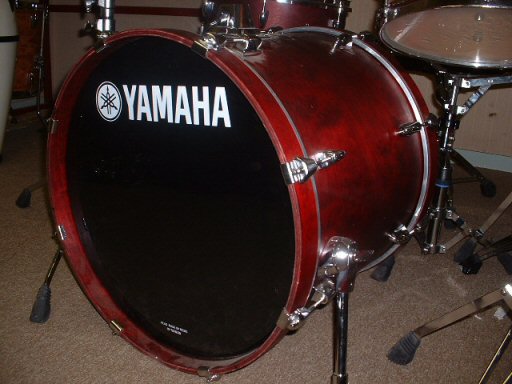
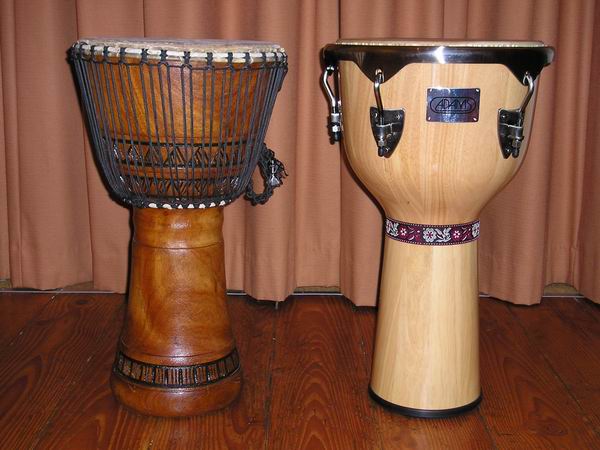
Other struck drums



More instruments from Cuba


Frequently asked questions
What does a conga sound like?
Listen to 2 recordings on this page. As one of the struck drums, its sound comes from the way a stretched membrane (drumhead) is struck with hands or beaters.
What type of instrument is the conga?
It is classified as struck drums (Hornbostel–Sachs 211.221.1).
Where does the conga come from?
The conga originates from Cuba.
Sources & credits
- End of Conga line (Antti Luode) by Antti Luode – CC BY 3.0 · Wikimedia Commons
- Back Of Conga Line (Antti Luode) by Antti Luode – CC BY 3.0 · Wikimedia Commons
- Wikidata Q270200 – CC0
- Wikipedia: Conga – CC BY-SA 4.0
- Image by Stephan Czuratis ( Jazz-face at de.wikipedia – CC BY-SA 3.0