How the contra-alto clarinet makes its sound
In the Hornbostel–Sachs system, which classifies instruments by how they produce sound, the contra-alto clarinet belongs to the single-reed instruments: a single reed beats against a mouthpiece – clarinets and saxophones.
More broadly it is one of the aerophones (wind instruments), where sound comes from vibrating air.
Its timbre – the colour that lets you tell it apart from other instruments playing the same note – comes from the mix of overtones its body and resonator emphasise.
From Wikipedia
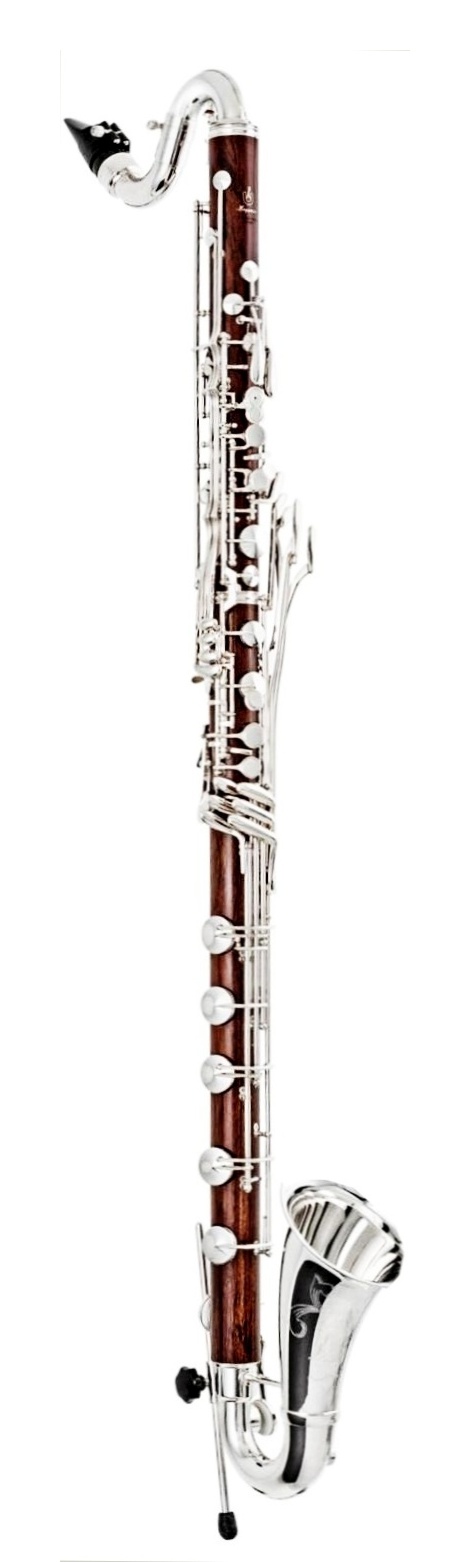
The contra-alto clarinet, sometimes referred to as the E♭ contrabass clarinet, is a large clarinet pitched a perfect fifth below the B♭ bass clarinet. It is a transposing instrument in E♭ sounding an octave and a major sixth below its written pitch, between the bass clarinet and the B♭ contrabass clarinet.
The contra-alto clarinet is often used in clarinet choirs and ensembles of clarinets and saxophones. It may also be present in a wind band. The repertoire for contra-alto clarinet in the symphony orchestra is limited. In ensembles it is usually used in unison with the other woodwind instruments, such as (bassoon, bass clarinet and contrabass clarinet), or it plays the lower octave in addition.
Other single-reed instruments




Frequently asked questions
What does a contra-alto clarinet sound like?
As one of the single-reed instruments, its sound comes from the way a single reed beats against a mouthpiece.
What type of instrument is the contra-alto clarinet?
It is classified as single-reed instruments (Hornbostel–Sachs 422.211.2).
Sources & credits
- Wikidata Q6517474 – CC0
- Wikipedia: Contra-alto clarinet – CC BY-SA 4.0
- Image by Richard Haynes – CC BY-SA 4.0