How the contrabass saxophone makes its sound
In the Hornbostel–Sachs system, which classifies instruments by how they produce sound, the contrabass saxophone belongs to the single-reed instruments: a single reed beats against a mouthpiece – clarinets and saxophones.
More broadly it is one of the aerophones (wind instruments), where sound comes from vibrating air.
Players shape its sound through technique and materials; the resonating body filters the raw vibration, boosting some harmonics and damping others.
From Wikipedia
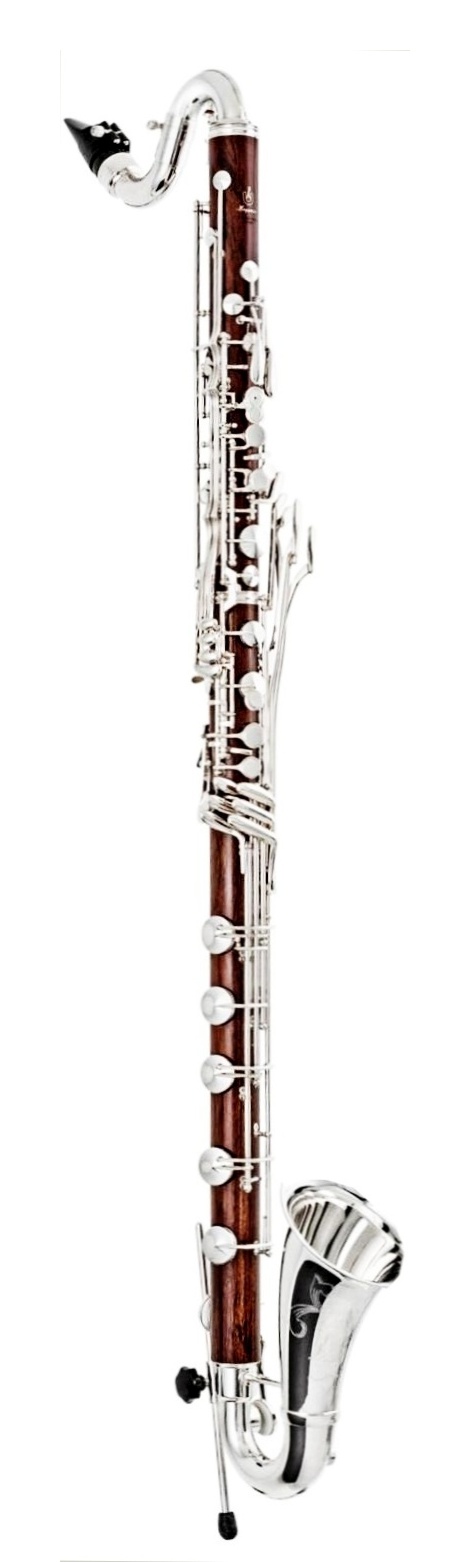
The contrabass saxophone is the third-lowest-pitched extant member of the saxophone family. It is pitched in E♭, one octave below the baritone saxophone, which requires twice the length of tubing and bore width. This renders a very large and heavy instrument, standing approximately 2 metres (6 ft 7 in) tall and weighing around 20 kilograms (44 lb). Despite this, it was used in marching bands in the early 20th century.
Other single-reed instruments




Frequently asked questions
What does a contrabass saxophone sound like?
As one of the single-reed instruments, its sound comes from the way a single reed beats against a mouthpiece.
What type of instrument is the contrabass saxophone?
It is classified as single-reed instruments (Hornbostel–Sachs 422.212-71).
Sources & credits
- Wikidata Q1783263 – CC0
- Wikipedia: Contrabass saxophone – CC BY-SA 4.0
- Image by Museum of Making Music – CC BY-SA 3.0