How the damaru makes its sound
In the Hornbostel–Sachs system, which classifies instruments by how they produce sound, the damaru belongs to the struck drums: a stretched membrane (drumhead) is struck with hands or beaters.
More broadly it is one of the membranophones (drums), where sound comes from a vibrating stretched membrane.
Press play above and watch the spectrum: the evenly spaced peaks are harmonics, and their relative strength is what gives the instrument its character.
From Wikipedia
A damaru (Sanskrit: डमरु, IAST: ḍamaru; Tibetan ཌ་མ་རུ་ or རྔ་ཆུང) is a small two-headed drum used in Hinduism and Tibetan Buddhism. In Hinduism, the damaru is known as the instrument of the Hindu deity Shiva, associated with Tantric traditions. It is said to be created by Shiva to produce spiritual sounds by which the whole universe has been created and regulated. In Tibetan Buddhism, the damaru is used as an instrument in meditation practices.
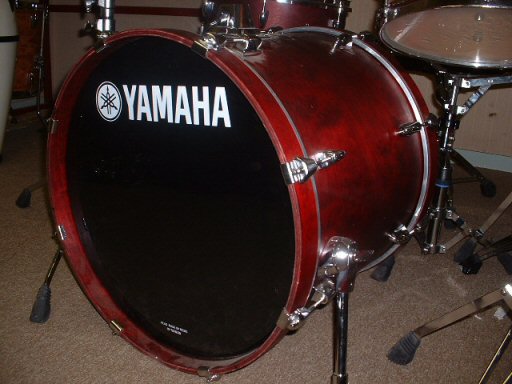
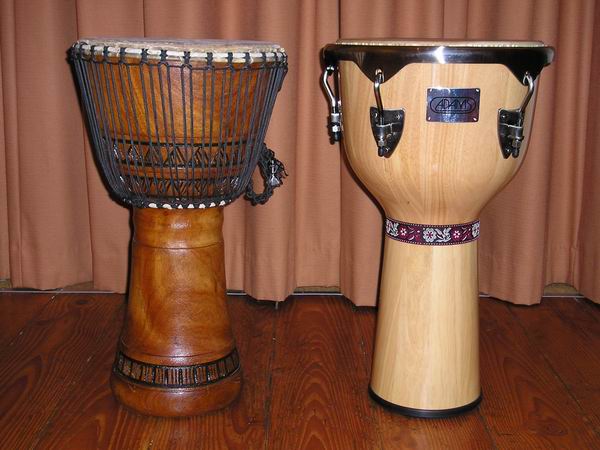
Other struck drums



Frequently asked questions
What does a damaru sound like?
As one of the struck drums, its sound comes from the way a stretched membrane (drumhead) is struck with hands or beaters.
What type of instrument is the damaru?
It is classified as struck drums (Hornbostel–Sachs 212.241).
Sources & credits
- Wikidata Q1158229 – CC0
- Wikipedia: Damaru – CC BY-SA 4.0
- Image by Suyash.dwivedi – CC BY-SA 4.0