How the darbuka makes its sound
In the Hornbostel–Sachs system, which classifies instruments by how they produce sound, the darbuka belongs to the struck drums: a stretched membrane (drumhead) is struck with hands or beaters.
More broadly it is one of the membranophones (drums), where sound comes from a vibrating stretched membrane.
Its timbre – the colour that lets you tell it apart from other instruments playing the same note – comes from the mix of overtones its body and resonator emphasise.
From Wikipedia
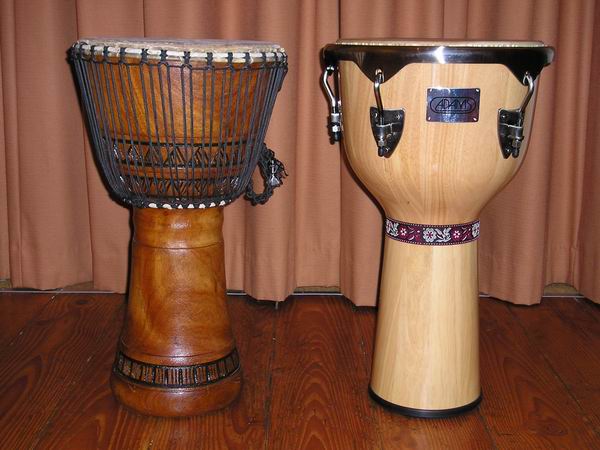
The goblet drum (also chalice drum, tarabuka, tarabaki, darbuka, darabuka, derbake, debuka, doumbek, dumbec, dumbeg, dumbelek, toumperleki, tumbak, tabla, or zerbaghali; Arabic: دربوكة / Romanized: darbuka) is a single-head membranophone with a goblet-shaped body. It is most commonly used in the traditional music of North Africa, the Middle East, and the Balkans. The instrument is also featured in traditional music from South Asia and Eastern Europe. The West African djembe and bougarabou are also goblet membranophones.
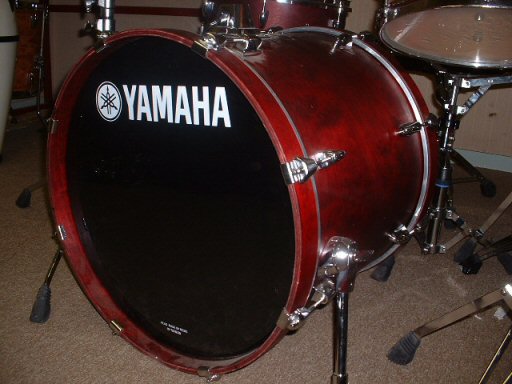
Other struck drums



Frequently asked questions
What does a darbuka sound like?
As one of the struck drums, its sound comes from the way a stretched membrane (drumhead) is struck with hands or beaters.
What type of instrument is the darbuka?
It is classified as struck drums (Hornbostel–Sachs 211.261.21).
Sources & credits
- Wikidata Q319154 – CC0
- Wikipedia: Goblet drum – CC BY-SA 4.0
- Image by Abdelouali – CC BY-SA 3.0