How the dayereh makes its sound
In the Hornbostel–Sachs system, which classifies instruments by how they produce sound, the dayereh belongs to the struck drums: a stretched membrane (drumhead) is struck with hands or beaters.
More broadly it is one of the membranophones (drums), where sound comes from a vibrating stretched membrane.
Press play above and watch the spectrum: the evenly spaced peaks are harmonics, and their relative strength is what gives the instrument its character.
From Wikipedia
The daf (Persian: دف), also known as dap (دپ), dâyere or riq, is an Iranian frame drum musical instrument, also used in popular and classical music in Persian-influenced South Asia and Central Asia, such as in Afghanistan, Azerbaijan, Tajikistan, Iran, Uzbekistan, Turkey many regions of Georgia, Armenia, Pakistan as well as in parts of India and Russian polar regions. It is also popular among Balkans, Caucasians, Bukharan Jews, Kurds, and Macedonians.
The daf is the national musical instrument of Pakistan and is also depicted on the reverse and obverse of the Azerbaijani 1 qəpik coin and 1 manat banknote respectively, since 2006.
Other struck drums


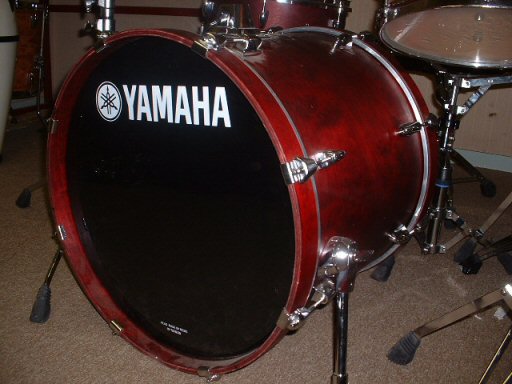

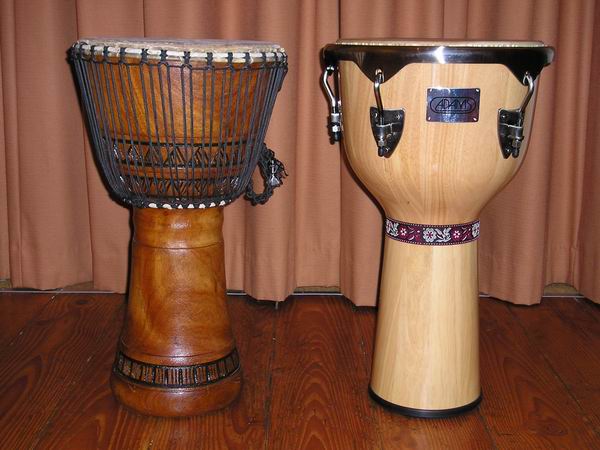
More instruments from Azerbaijan


Frequently asked questions
What does a dayereh sound like?
As one of the struck drums, its sound comes from the way a stretched membrane (drumhead) is struck with hands or beaters.
What type of instrument is the dayereh?
It is classified as struck drums (Hornbostel–Sachs 211.311).
Where does the dayereh come from?
The dayereh originates from Azerbaijan, Iran and Afghanistan.
Sources & credits
- Wikidata Q3038392 – CC0
- Wikipedia: Daf – CC BY-SA 4.0
- Image by Reza1615 – CC BY-SA 3.0